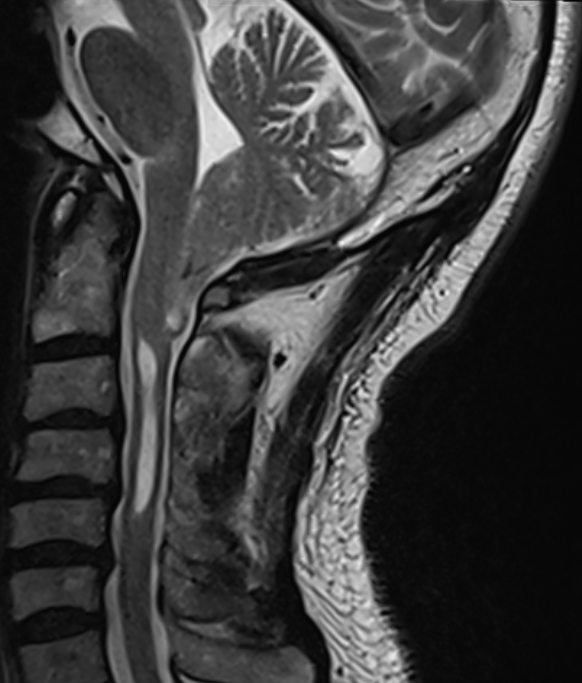
Arnold-Chiari malformation comprises four types of congenital abnormalities or malformations of the rhombencephalon. With the exception of Arnold-Chiari malformation type IV, these malformations are characterized by caudal displacement of the pons, medulla oblongata, or cerebellum or vermis cerebelli. Arnold-Chiari malformations type I and type II are the most common.
Chiari Type I Malformation
Patients with a Chiari malformation develop clinical symptoms due to the following causes1.
- Compression of the brainstem
- Hydrocephalus
- Syringomyelia
- Isolation of the intracranial compartment from the spinal compartment, which can lead to transient increases in intracranial pressure.

Symptoms
15-30% of all adult patients with a Chiari I malformation are asymptomatic2. The most common symptom of a Chiari I malformation is headache, which occurs in 69 % of patients3 and typically presents in the suboccipital region. Headaches can often be triggered by neck extension or a Valsalva maneuver.
Overview of the possible symptoms in Chiari I malformations based on 71 patients4:
| Symptom | Frequency (%) |
|---|---|
| Pain | 69 % |
| Weakness (1 or more extremities) | 56 % |
| Sensory disturbance (1 or more extremities) | 52 % |
| Impaired temperature sensation | 40 % |
| Balance disturbances | 40 % |
| Diplopia | 13 % |
| Dysphasia | 8 % |
| Tinnitus | 7 % |
| Vomiting | 5 % |
| Dysarthria | 4 % |
References