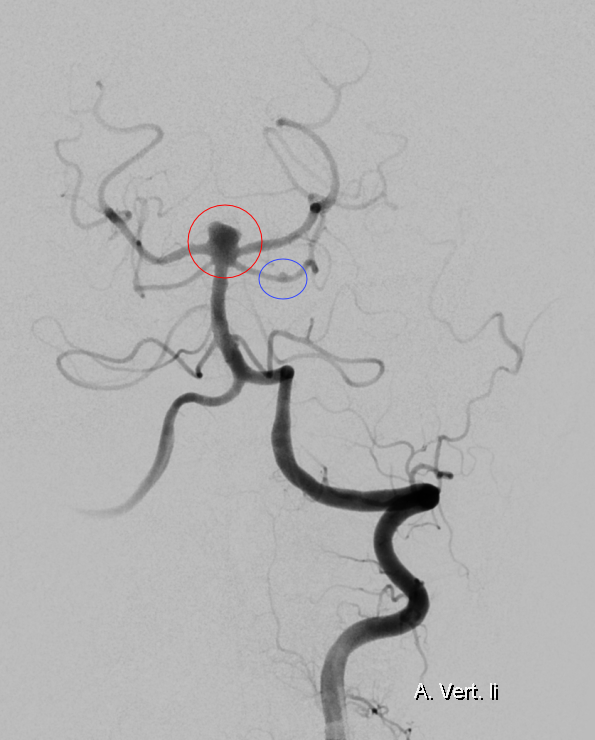
The superior cerebellar artery (Superior cerebellar artery, SCA) is a vascular branch arising from the terminal segment of the Basilar artery, which supplies the Cerebellum.
Anatomy
Blood supply
Through its branches, the SCA supplies the Brainstem, the cerebellar peduncles, and the cerebellum.
Course
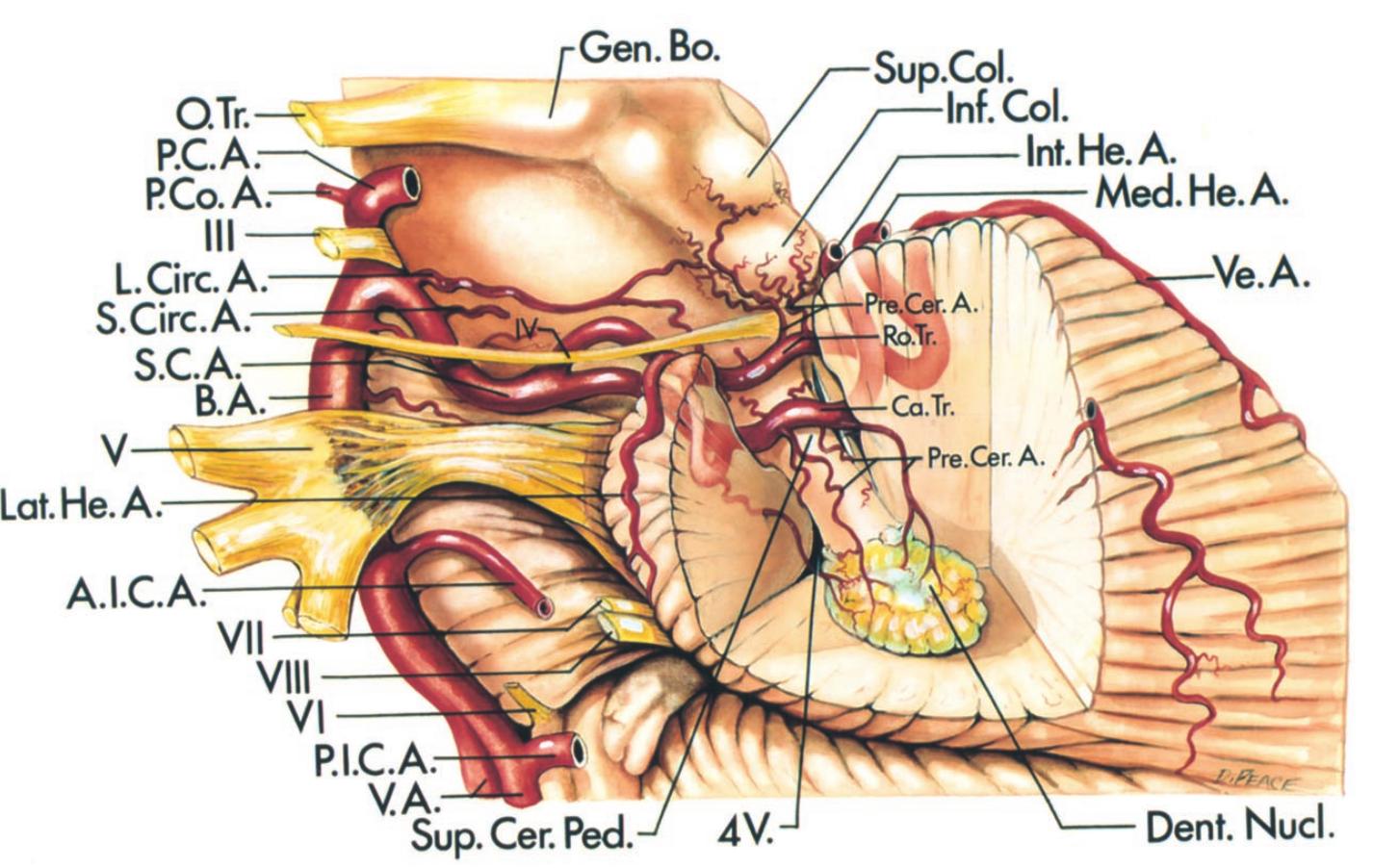
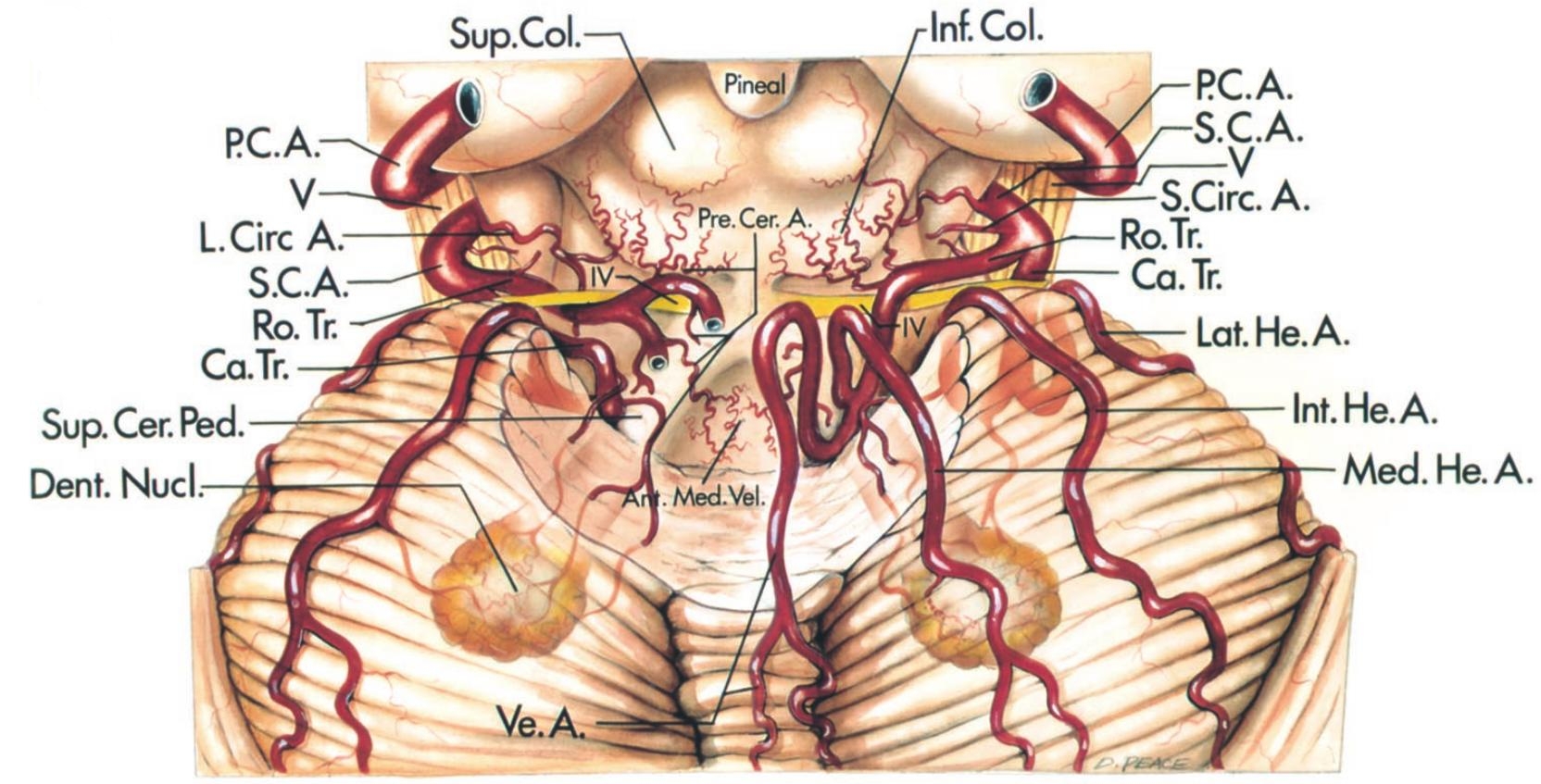
The superior cerebellar artery (SCA) usually arises directly from the basilar artery anterior to the Midbrain and courses inferior to the Oculomotor nerve. In some cases, the SCA may also arise from the Posterior cerebral artery (PCA) and course superior to the oculomotor nerve. The SCA then courses caudally and encircles the Brainstem near the pontomesencephalic junction, passing inferior to the Trochlear nerve and superior to the Trigeminal nerve. The proximal portion of the SCA courses medial to the free edge of the Tentorium cerebelli, while the distal portion courses inferior to the tentorium. Thus, the SCA is the most rostrally located artery among the infratentorial arteries. After passing the trigeminal nerve, the SCA courses in the Cerebellomesencephalic fissure, where branches of the SCA extend into the deep white matter of the cerebellum and supply the Dentate nucleus. Upon emerging from the cerebellomesencephalic fissure, the branches of the SCA course medial to the tentorial edge, pass posteriorly and inferiorly to the tentorial edge, and distribute over the tentorial surface. Along its course, the SCA frequently has points of contact with the oculomotor, trochlear, and trigeminal nerves[^2].
Segments
The superior cerebellar artery can be divided into four segments[^2]:
Anterior pontomesencephalic segment
Lateral pontomesencephalic segment
Cerebellomesencephalic segment
Cortical segment
Figure
Imaging
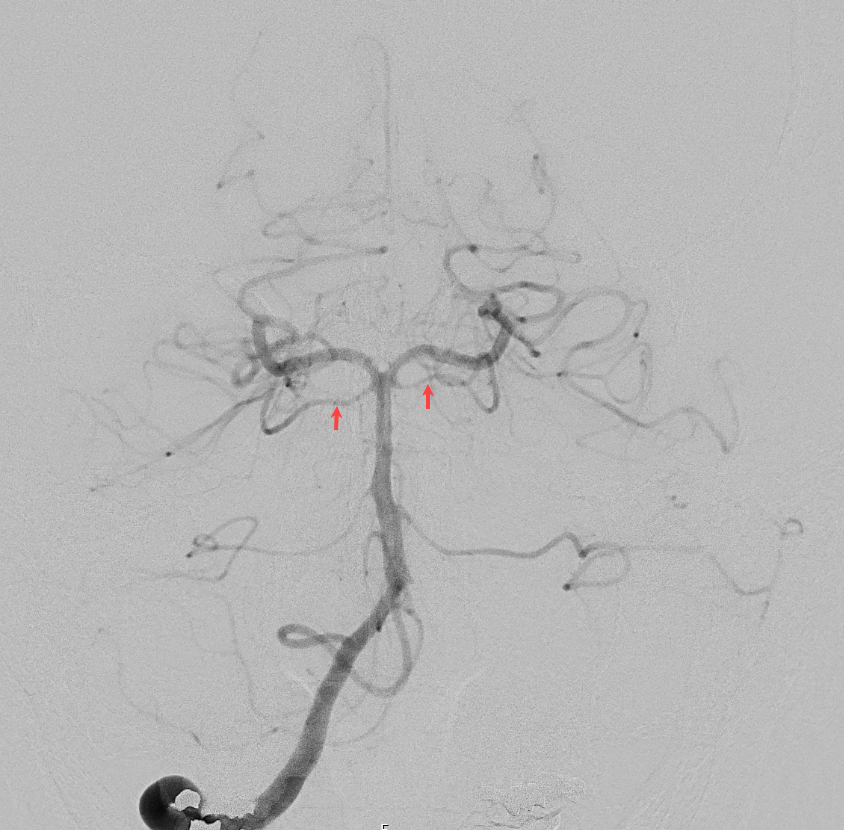
The gold standard for optimal visualization of the superior cerebellar artery is digital subtraction angiography.
Clinical relevance
Trigeminal neuralgia
The superior cerebellar artery is the most common cause of neurovascular conflict in Trigeminal neuralgia, accounting for ~75 % of cases[^1].
Aneurysm
Aneurysms of the superior cerebellar artery are extremely rare and may be treated either microsurgically or endovascularly, depending on the case[^3].