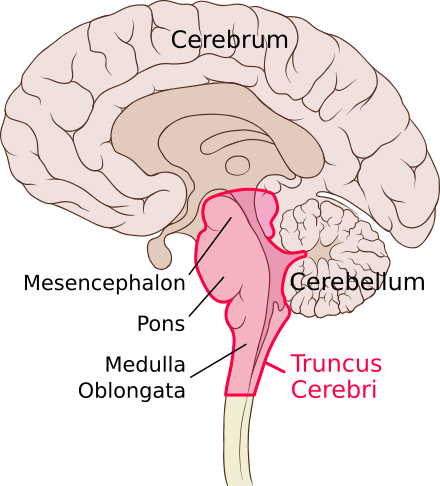
The brainstem, or Truncus encephali, refers to the areas of the brain located below the Diencephalon, excluding the Cerebellum.
Anatomy
The following anatomical structures are considered part of the brainstem:
Pons (bridge) as part of the hindbrain (metencephalon)
Medulla oblongata (Medulla oblongata) or myelencephalon
The brainstem is the part of the brain that, during embryonic development, is underlain by the notochord and from which ten true peripheral nerve pairs (Cranial nerves III–XII) emerge[^1].
Figure
Functions
The brainstem controls many functions essential for the body's survival, including respiration, heart rate, and blood pressure.
Safe Entry Zones
The following areas are considered possible surgical Safe Entry Zones to the brainstem[^2]: