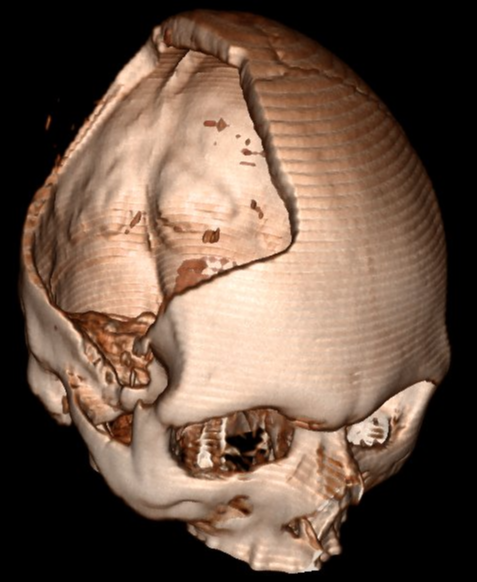
In decompressive hemicraniectomy, large portions of the calvarium are removed to create additional space in cases of increased intracranial pressure that cannot be controlled conservatively. The removed bone flap is generally preserved for later reimplantation.
Indication
In neurosurgery, the procedure serves as a last resort for medically refractory increased intracranial pressure. Common indications for decompressive hemicraniectomy include:
Complications
The complication rate is relatively high at 50–60 %1. The most common early complications include2:
- Development of subdural hygromas over the course of the disease.
- Paradoxical herniation
Many complications also occur only later (>30 days) after surgery3:
- Wound healing disorders and infection
- Hydrocephalus
- Sinking skin flap syndrome
- Bone flap resorption after reimplantation
Procedure
To achieve sufficient reduction of intracranial pressure, the removed bone flap should measure more than 12 cm in the anteroposterior diameter4.
Imaging
References