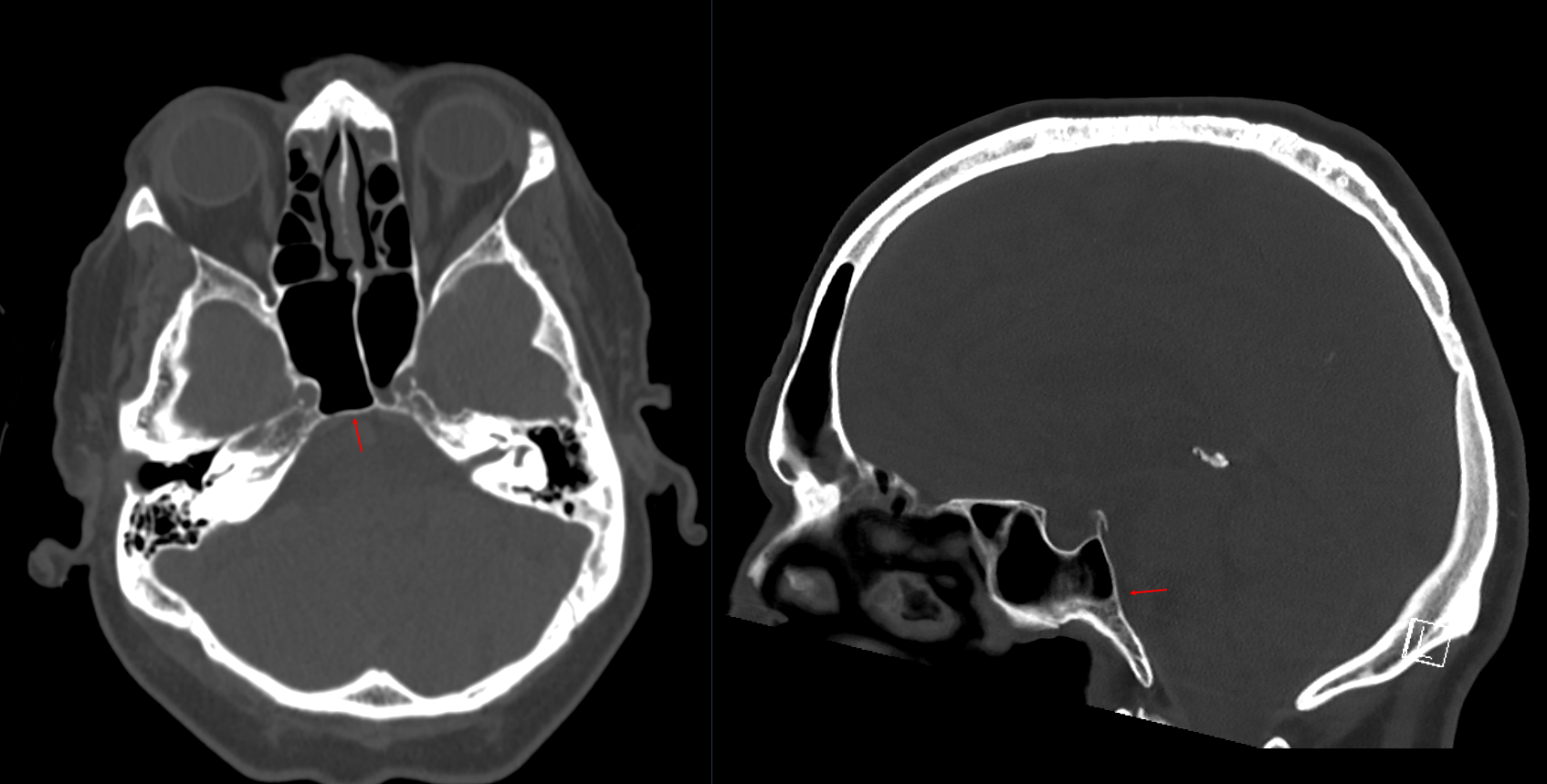
The clivus is the posteriorly sloping bony structure that separates the middle from the posterior cranial fossa and forms a central part of the skull base.
Anatomy
The clivus is formed by the clivus ossis occipitalis, which is formed by the pars basilaris of the Os occipitale, and the clivus ossis sphenoidalis, which is part of the corpus of the Os sphenoidale. On the clivus, the two Vertebral arteries unite to form the unpaired Arteria basilaris[^1].
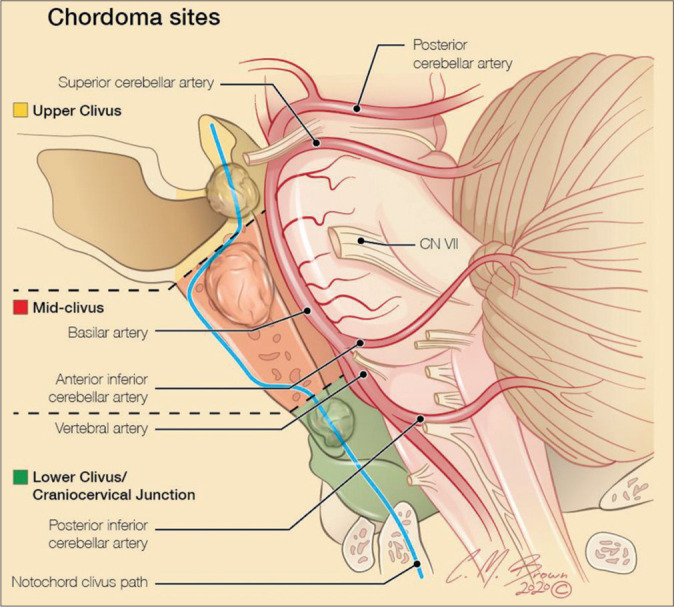
The clivus can be divided microsurgically into three different parts[^2]:
Designation | Description |
Upper clivus | The upper clivus extends from the superior aspect of the Sella turcica to the level of Dorello's canal. |
Middle clivus | From the inferior border of the sphenoidal sella to the level of the choanae. |
Lower clivus | The lower clivus is also referred to as the "nasopharyngeal clivus" and extends to the craniovertebral junction. |
Clinical relevance
The clival region is of great clinical importance because typical pathologies such as Chordomas, metastatic tumors, inflammation, and fibrous dysplasias can occur there. In addition, trauma can result in fractures involving the clivus.