Brain metastases are space-occupying lesions in the brain that originate from a primary tumor located outside the brain. Depending on their number, size, and clinical symptoms, surgical removal may be indicated. In principle, brain metastases can occur anywhere in the brain.
Epidemiology
Brain metastases are the most common brain tumors in adults and occur annually in 10–15 per 100 000 individuals; in 30–50 % of cases, they are solitary metastases[^2].
Primary tumors
Lung carcinomas, renal carcinomas, and colon carcinomas account for approximately 80% of brain metastases in men, whereas in women, breast carcinomas, lung carcinomas, colon carcinomas, and melanomas are responsible for 80% of metastases[^3].
Depending on the primary tumor, the risk of developing a brain metastasis varies[^1]:
Primary tumor | Estimated cumulative incidence after 5 years |
Lung carcinoma | 16,3 % |
Renal carcinoma | 9,8 % |
Melanoma | 7,4 % |
Breast carcinoma | 5 % |
Colorectal carcinoma | 1,2 % |
Imaging
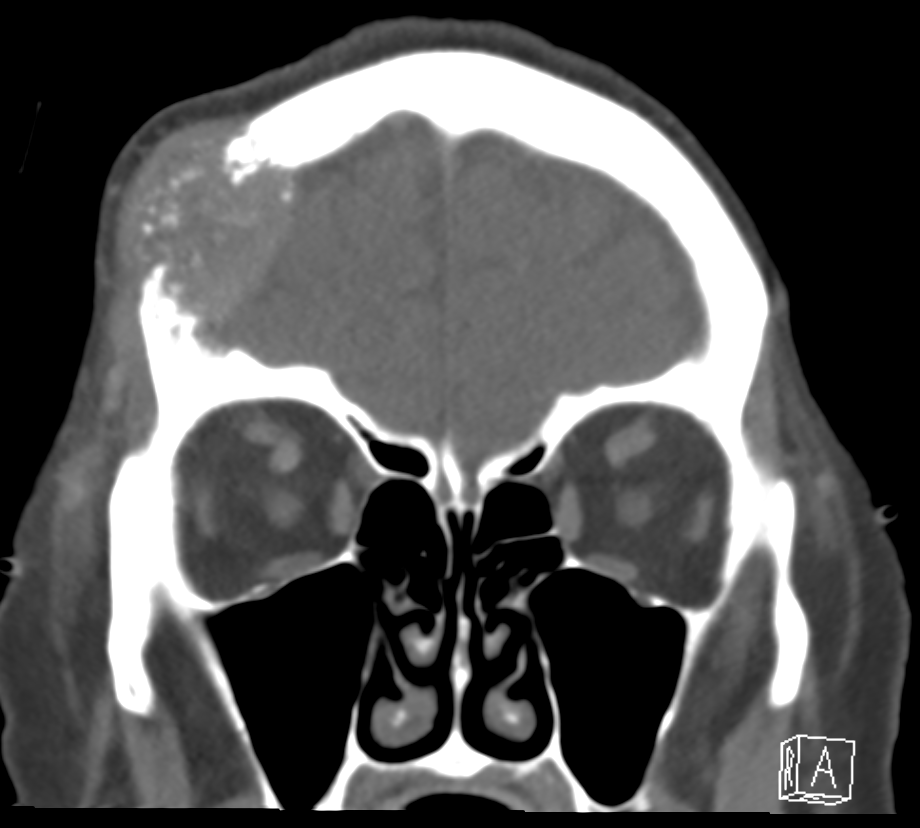
The gold standard for imaging brain metastases is MRI imaging. In cases of brain metastases with bone involvement, additional CT imaging may be helpful.

Radiosensitivity
Depending on the primary tumor, brain metastases show varying degrees of response to radiation therapy. The following table shows the radiosensitivity of various brain metastases to Whole-brain irradiation[^4] [^5]:
Radiosensitivity | Tumor |
Radiosensitive |
|
Moderately radiosensitive |
|
Moderately radioresistant |
|
Highly radioresistant |
|