The ophthalmic artery arises as the first intracranial vascular branch from the Internal carotid artery (ICA) proximal to the Posterior communicating artery.
Anatomy
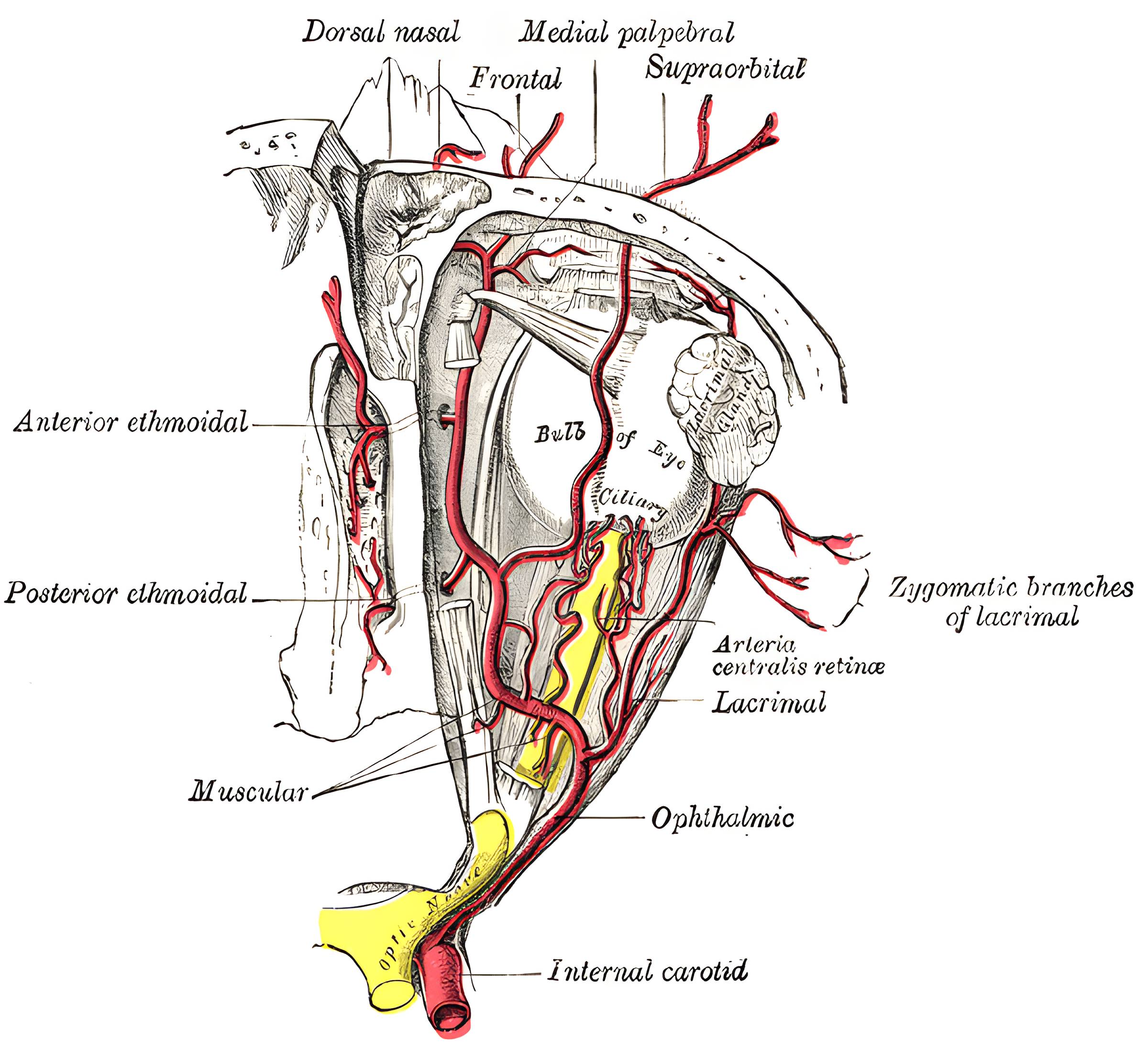
The ophthalmic artery courses inferior to the Nervus opticus through the Canalis opticus into the Orbita[^3]. The most important arterial anastomosis between the internal carotid artery and the Arteria carotis externa runs via the ophthalmic artery[^2].
Vascular branches
The ophthalmic artery gives rise to the following arterial branches:
Central retinal artery
Long posterior ciliary arteries
Short posterior ciliary arteries
Muscular branches
Palpebral arteries
Dorsal nasal artery
Anatomical variants
In approximately 89 % of cases, the ophthalmic artery arises distal to the Cavernous sinus, in approximately 8 % of cases within the cavernous sinus, and in approximately 3 % of cases the ophthalmic artery is completely absent [^1].
Figure
Imaging
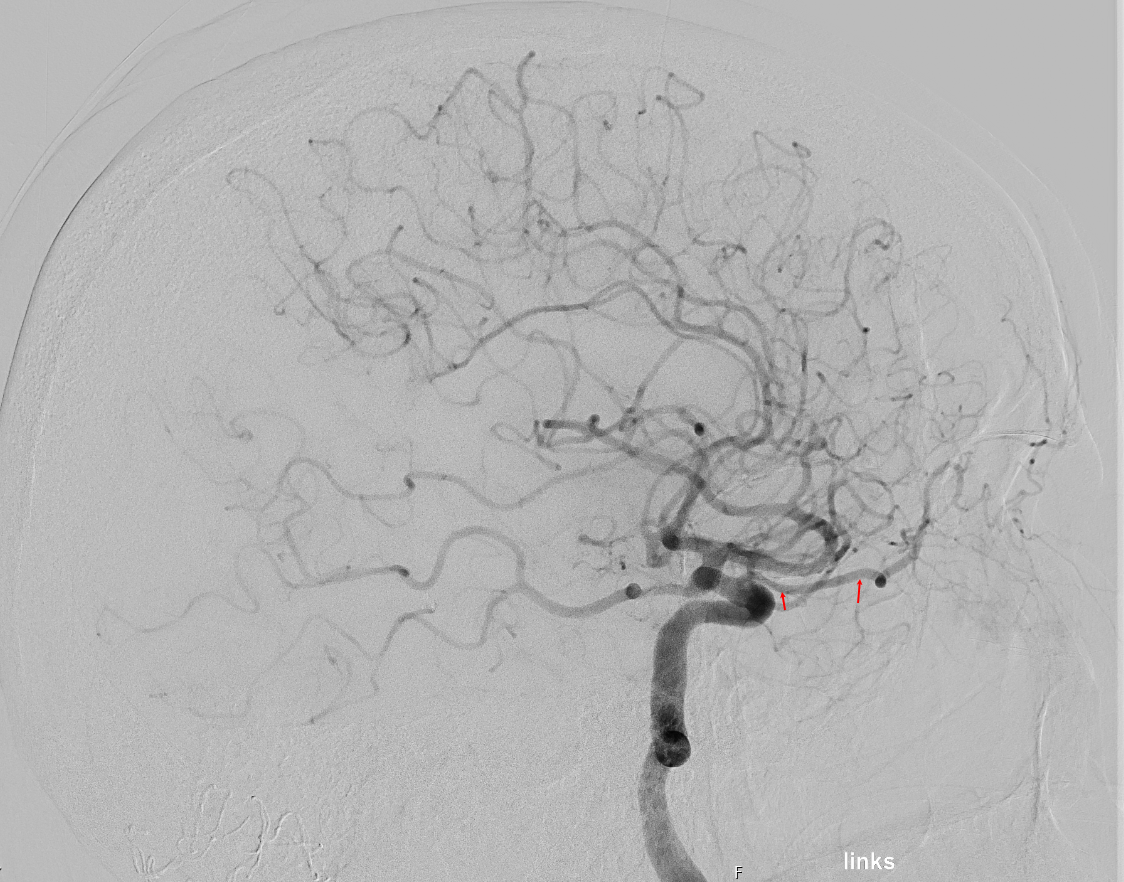
The gold standard for visualizing the ophthalmic artery is digital subtraction angiography.
Clinical manifestations of occlusion
Occlusion of the ophthalmic artery results in monocular blindness or Amaurosis fugax. Due to the extensive collateral circulation with the external carotid artery, the symptoms are often only transient[^2].