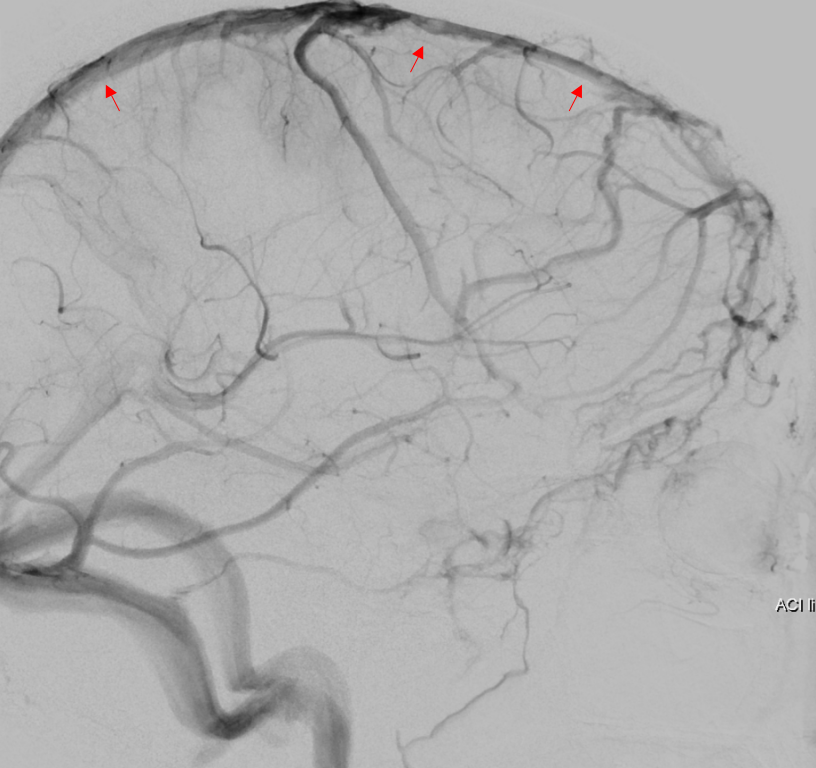
The superior sagittal sinus is an intradural venous sinus of the brain.
Anatomy
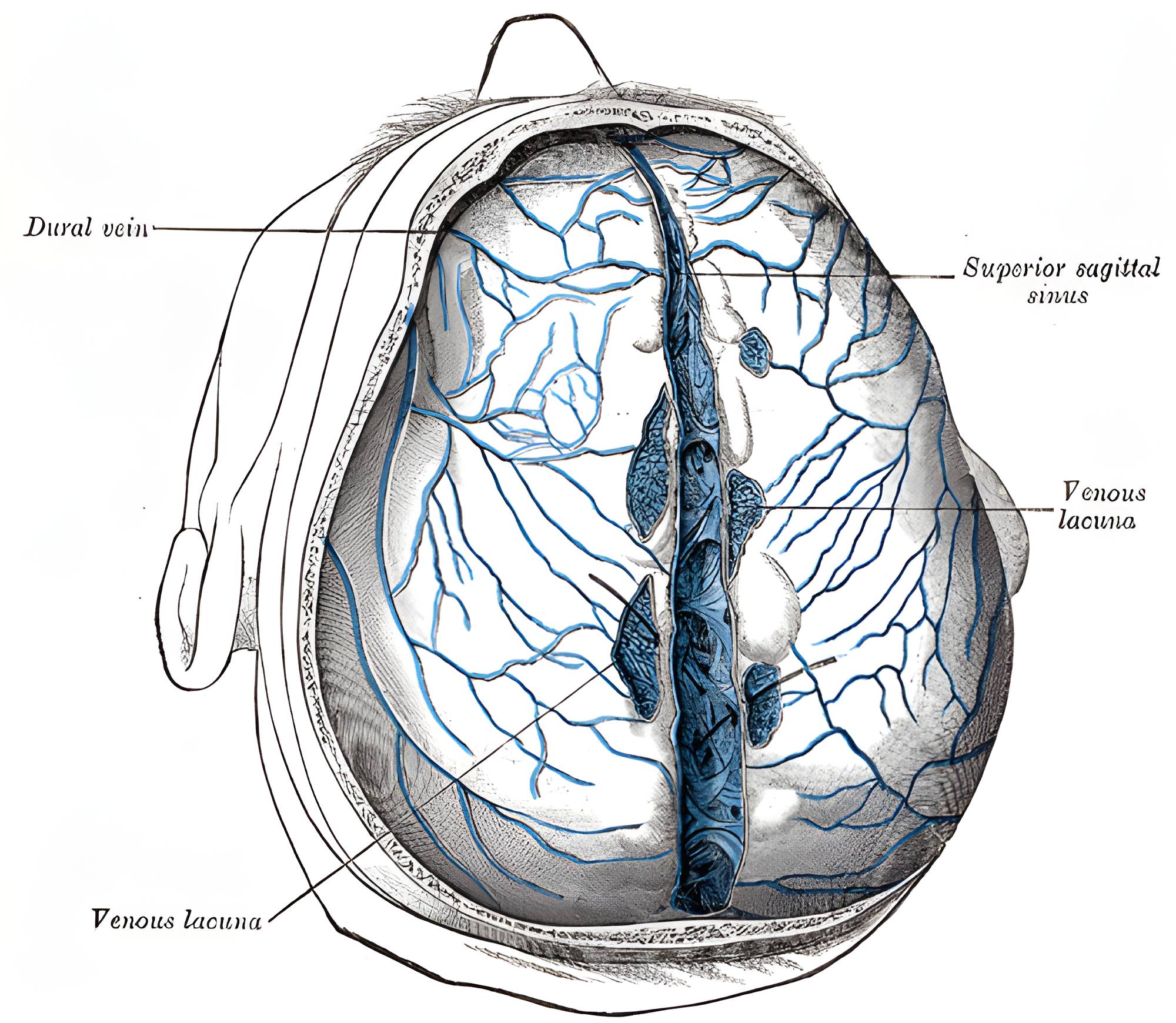
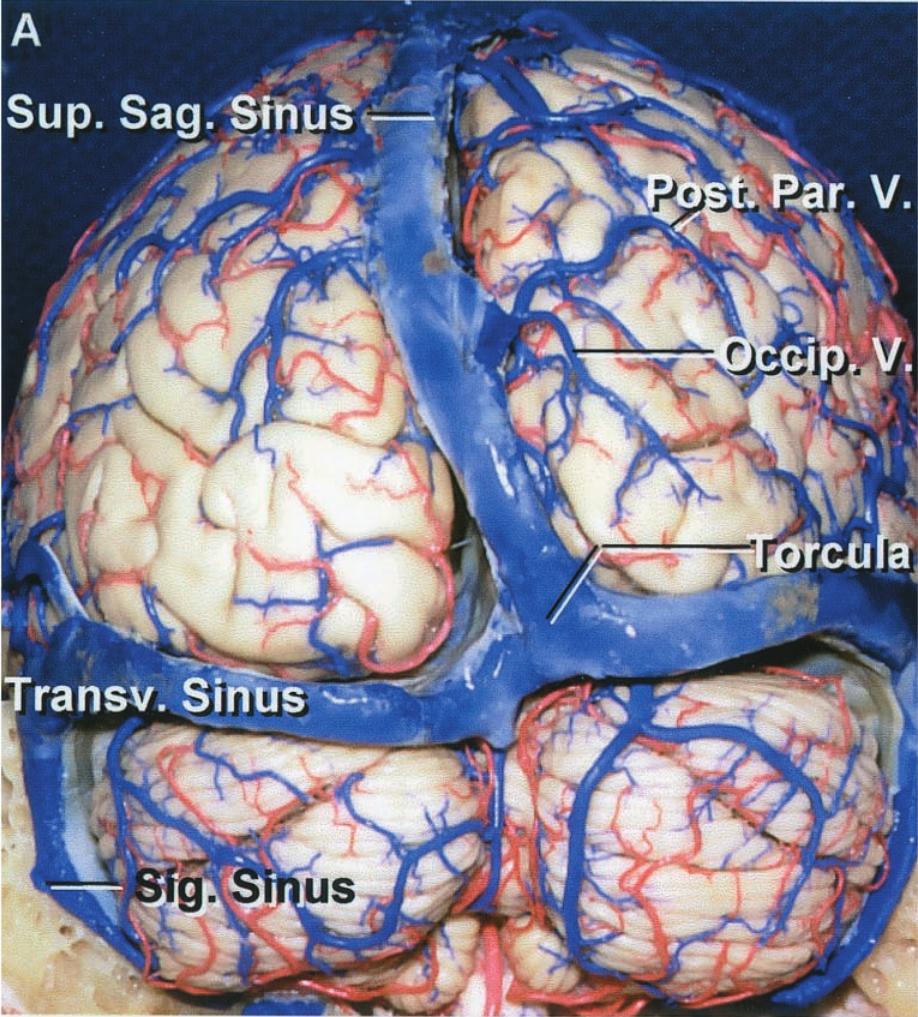
The superior sagittal sinus runs along the superior margin of the Longitudinal fissure of the cerebrum and receives venous blood via the Bridging veins. Venous drainage occurs via the Confluence of sinuses through the Transverse sinus and Sigmoid sinus into the Internal jugular vein[^1].
Clinical relevance
Cerebral venous sinus thrombosis can occur in the superior sagittal sinus and thereby impair venous drainage.
Tumors such as Meningiomas, for example, can infiltrate the superior sagittal sinus and thereby impair venous drainage.
Intraoperative injuries to the superior sagittal sinus, such as during a Craniotomy, can result in severe venous bleeding.
The superior sagittal sinus may be involved in vascular malformations such as dural arteriovenous fistulas (dAVFs) or arteriovenous malformations (AVMs).
Figure
Imaging
Depending on the clinical question, the superior sagittal sinus can be visualized using a variety of imaging modalities, such as the venous phase of contrast-enhanced CT imaging, MRI imaging, or digital subtraction angiography.