The greater petrosal nerve is a parasympathetic branch of the facial nerve that separates from it in the region of the Geniculate ganglion.
Anatomy
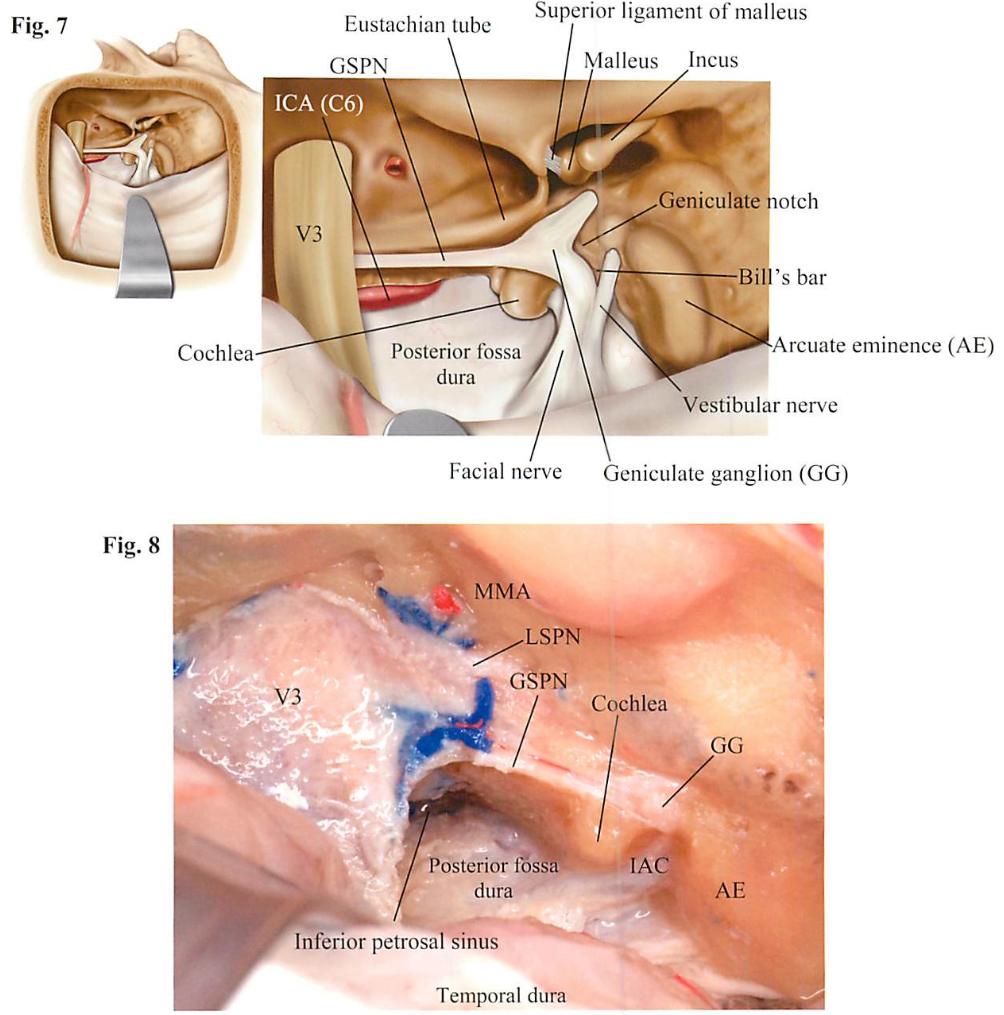
The greater petrosal nerve passes through the anterior surface of the petrous pyramid into the middle cranial fossa, where it runs in a sulcus named after the nerve to the Foramen lacerum, through which it exits the cranial cavity. At the external skull base, it joins sympathetic fibers originating from the nerve plexus of the Arteria carotis interna, which are referred to as the deep petrosal nerve. The union of the two nerves then passes through the Canalis pterygoideus of the sphenoid bone, where it is referred to as the nerve of the pterygoid canal. This nerve is the afferent branch to the pterygopalatine ganglion.
Innervation
The greater petrosal nerve innervates the lacrimal gland and the mucosa of the nasal cavity.
Figure
Clinical relevance
Microsurgical approaches in the region of the middle cranial fossa can result in injury to the greater petrosal nerve.
Deficits
Damage to or deficits of the greater petrosal nerve may be associated with facial nerve paresis, hearing impairment, dry eyes, headache, or Diplopia[^1] [^2].