A carotid-cavernous fistula is a direct shunt connection between the Internal carotid artery, its meningeal branches, or branches of the External carotid artery.
Etiology
CC fistulas may arise spontaneously, iatrogenically, or traumatically. A carotid-cavernous fistula occurs in approximately 0.2 % of all patients with a Traumatic brain injury[^1].
Symptoms
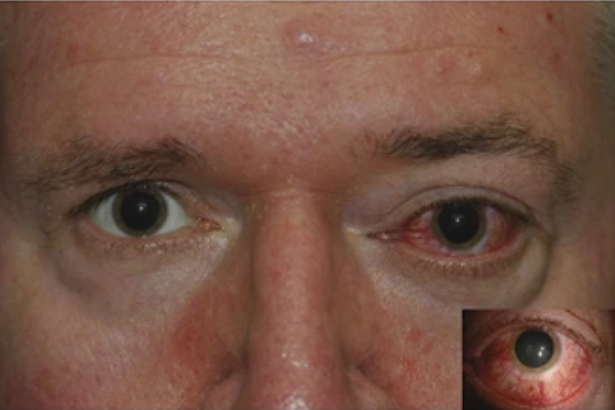
The clinical symptoms of CC fistulas vary depending on their severity but may include the following[^2]:
Subjective bruit
Diplopia
Tearing & red eye
Foreign body sensation in the eye
Blurred vision
Headache
Imaging
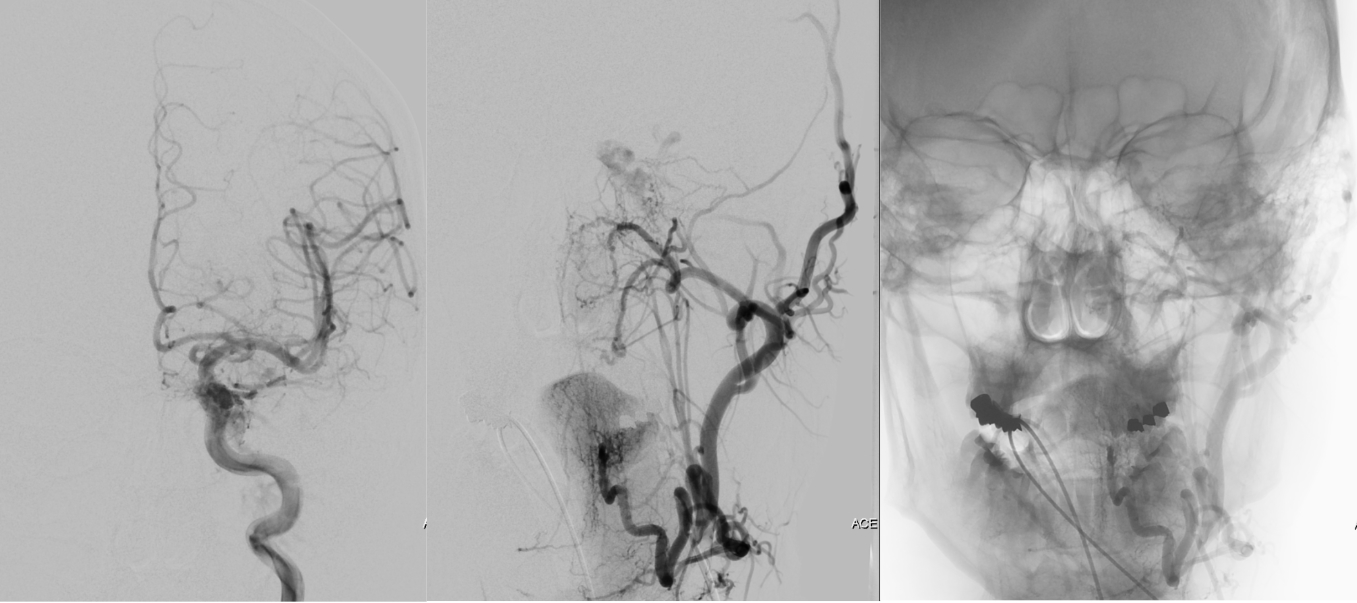
The gold standard for diagnosing CC fistulas is digital subtraction angiography.
Classification
CC fistulas can be classified according to the Barrow classification[^3].
Prognosis
More than 80 % of patients treated endovascularly achieve complete recovery[^4] [^5]. Approximately 40 % of patients experience a transient worsening of symptoms after the intervention, which subsequently improves[^6]. The symptoms of Chemosis and Proptosis usually resolve within hours to days, whereas deficits involving the Cranial nerves normally require several weeks to recover. Recovery of vision is variable and depends on the duration, severity, and exact cause[^4].