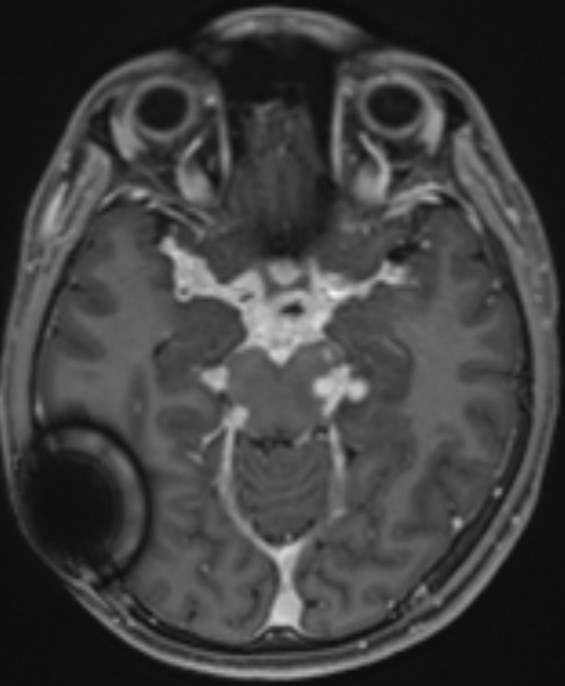
Meningitis is inflammation of the meninges. It can be caused by viruses, bacteria, or other microorganisms, but it can also occur as a result of noninfectious stimuli.
Posttraumatic meningitis
Posttraumatic meningitis occurs in 1-20 % of patients with moderate to severe Traumatic brain injury[^2]. In most cases, posttraumatic meningitis occurs within 2 weeks after the trauma, but in individual cases it may also occur later. In 75 % of patients with posttraumatic meningitis, fractures of the Skull base are present, and in 58 % there is a traumatic Cerebrospinal fluid leak[^3].
Chronic meningitis
Chronic meningitis is usually caused by tuberculosis, a fungal infection, or Neurocysticercosis. Sarcoidosis or meningeal carcinomatosis may be considered in the differential diagnosis[^1].
Iatrogenic meningitis
Meningitis can develop as a complication after spinal or cranial procedures, or after minor procedures such as Lumbar drainage procedures[^4], Lumbar punctures[^5], or Myelograms[^6].
Tuberculous meningitis
Tuberculous meningitis is an infectious inflammation of the meninges that can occur during the secondary stage of tuberculosis. Typically, the basal regions of the brain are affected and the patient.