Lumbar puncture

Synonyms
LP, lumbar puncture

A lumbar puncture is a puncture of the dural sac in the lumbar spine for the purpose of diagnostic or therapeutic collection of Cerebrospinal fluid.

Procedure

A hollow needle is inserted into the lumbar canal below the first and second lumbar vertebral bodies, and cerebrospinal fluid is collected. A lumbar puncture is usually performed at the level between the fourth and fifth lumbar vertebral bodies. Lumbar puncture is the most common method of cerebrospinal fluid collection. In neurosurgery, lumbar puncture is frequently performed in cases of imaging-negative Subarachnoid hemorrhages as well as for the CSF tap test in patients with Normal-pressure hydrocephalus.

Opening pressure

Opening pressure is the pressure measured immediately after performing a lumbar puncture. The measurement can be performed using a so-called standpipe. A study of 242 adults showed a 95% reference interval of 10 to 25 cmCSF as the normal opening pressure, with minor variations depending on the patients’ BMI[^1]. To reliably measure opening pressure during lumbar puncture, the procedure should be performed with the patient lying down rather than sitting.

Contraindications

  • Both superficial and deep inflammation of the skin or subcutaneous tissue, as well as inflammation of the muscles in the area of the puncture site, constitute a contraindication to lumbar puncture.

  • Disorders of cerebrospinal fluid circulation, such as the presence of Aqueductal stenosis.

  • Increased Intracranial pressure with a risk of Herniation.

Risks

Lumbar puncture is a commonly performed procedure, and serious complications are rare. The most common complication after lumbar puncture is post-dural puncture headache, occurring in approximately 32% of cases[^2].
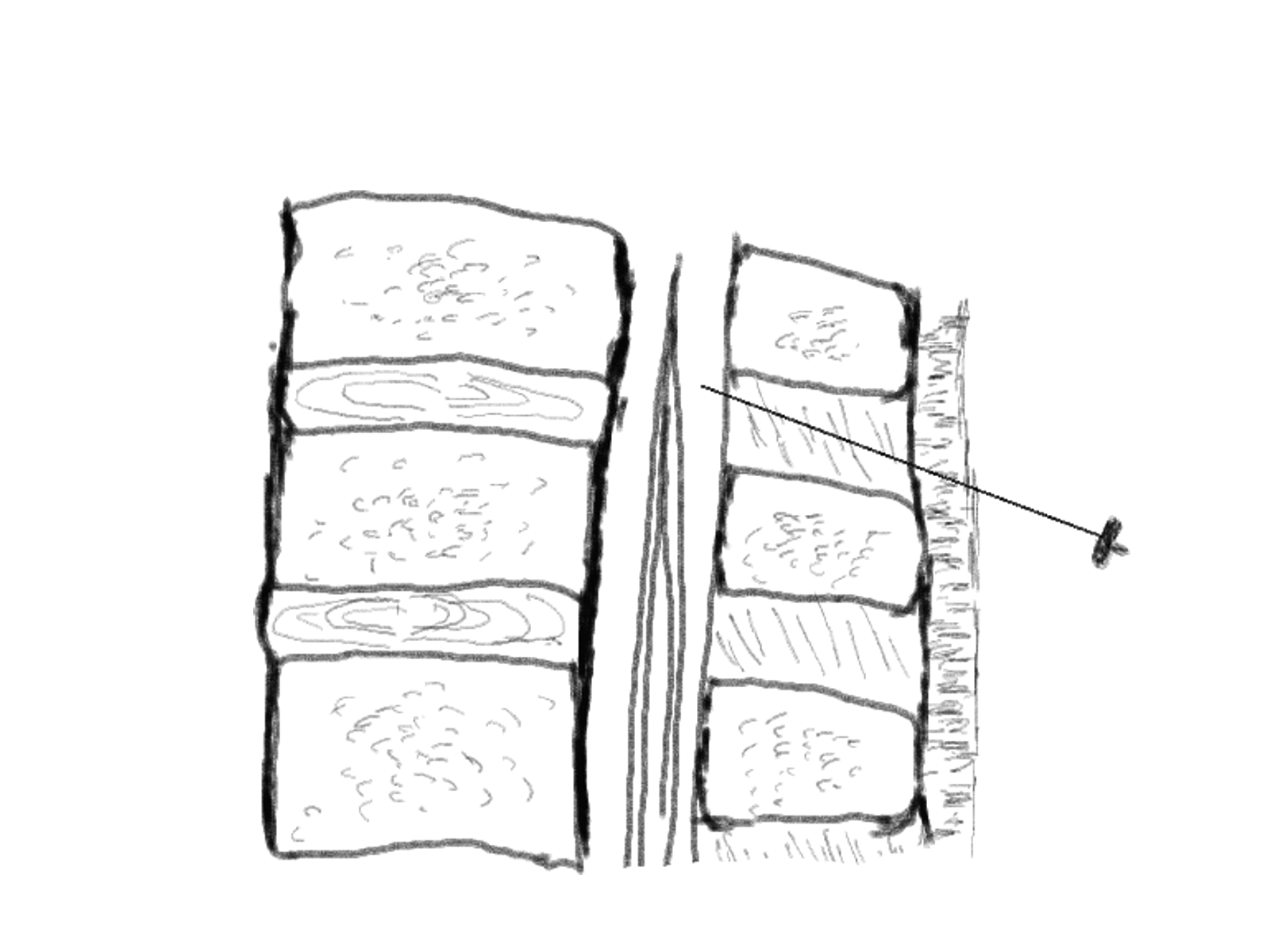
Figure

Schematic illustration of a lumbar puncture.
Schematic anatomical illustration of a lumbar puncture.
Clear CSF after lumbar puncture
Clear CSF obtained by lumbar puncture.

Editorial transparency

Authorship & revisions

Who created and updated this article, and which changes are documented.

Article created by
Last edited:
on
Revision history
8 edits · 1 contributor
Author list:
Show revision history 8 entries

8 edits by 1 author

Edit · Alaric Steinmetz ·

No content change recorded

Edit · Alaric Steinmetz · (+14 −14)
  • Text changed: “A lumbar puncture is a puncture of the dural sac in the region of the lumbar spine, with the aim of obtaining Cerebrospinal fluid for diagnostic or therapeutic purposes.”“A lumbar puncture is a puncture of the dural sac in the lumbar spine for the purpose of diagnostic or therapeutic collection of Cerebrospinal fluid .”
  • Text changed: “A hollow needle is inserted into the lumbar canal below the first and second lumbar vertebral bodies, and cerebrospinal fluid is collected. A lumbar puncture is usually performed at the level between the 4th and 5th lumbar vertebrae. Lumbar puncture is the most common form of cerebrospinal fluid collection. In neurosurgery, lumbar puncture is frequently performed in cases of imaging-indeterminate Subarachnoid hemorrhages , as well as for the CSF drainage test in patients with Normal pressure hydrocephalus .”“A hollow needle is inserted into the lumbar canal below the first and second lumbar vertebral bodies, and cerebrospinal fluid is collected. A lumbar puncture is usually performed at the level between the fourth and fifth lumbar vertebral bodies. Lumbar puncture is the most common method of cerebrospinal fluid collection. In neurosurgery, lumbar puncture is frequently performed in cases of imaging-negative Subarachnoid hemorrhages as well as for the CSF tap test in patients with Normal-pressure hydrocephalus .”
  • Text changed: “The opening pressure is the pressure measured directly after performing a lumbar puncture. The measurement can be taken using a so-called Standpipe . A study of 242 adults showed a 95% reference interval of 10 to 25 cmCSF as a normal opening pressure, with minor variations depending on the patients' BMI[^1]. To reliably measure the opening pressure during a lumbar puncture, the lumbar puncture should be performed with the patient lying down rather than sitting.”“Opening pressure is the pressure measured immediately after performing a lumbar puncture. The measurement can be performed using a so-called standpipe . A study of 242 adults showed a 95% reference interval of 10 to 25 cmCSF as the normal opening pressure, with minor variations depending on the patients’ BMI[^1]. To reliably measure opening pressure during lumbar puncture, the procedure should be performed with the patient lying down rather than sitting.”
  • Text changed: “Lumbar puncture is a frequently performed procedure, and serious complications are rare. The most common complication after lumbar puncture is post-dural puncture headache, occurring in approximately 32% of cases[^2].”“Lumbar puncture is a commonly performed procedure, and serious complications are rare. The most common complication after lumbar puncture is post-dural puncture headache, occurring in approximately 32% of cases[^2].”
Edit · Alaric Steinmetz ·

No content change recorded

Edit · Alaric Steinmetz · (+211 −0)

No content change recorded

Edit · Alaric Steinmetz · (+0 −209)

No content change recorded

Edit · Alaric Steinmetz · (+211 −0)

No content change recorded

Edit · Alaric Steinmetz · (+0 −209)

No content change recorded

Article created on · Alaric Steinmetz

Image viewer

Image

Open original