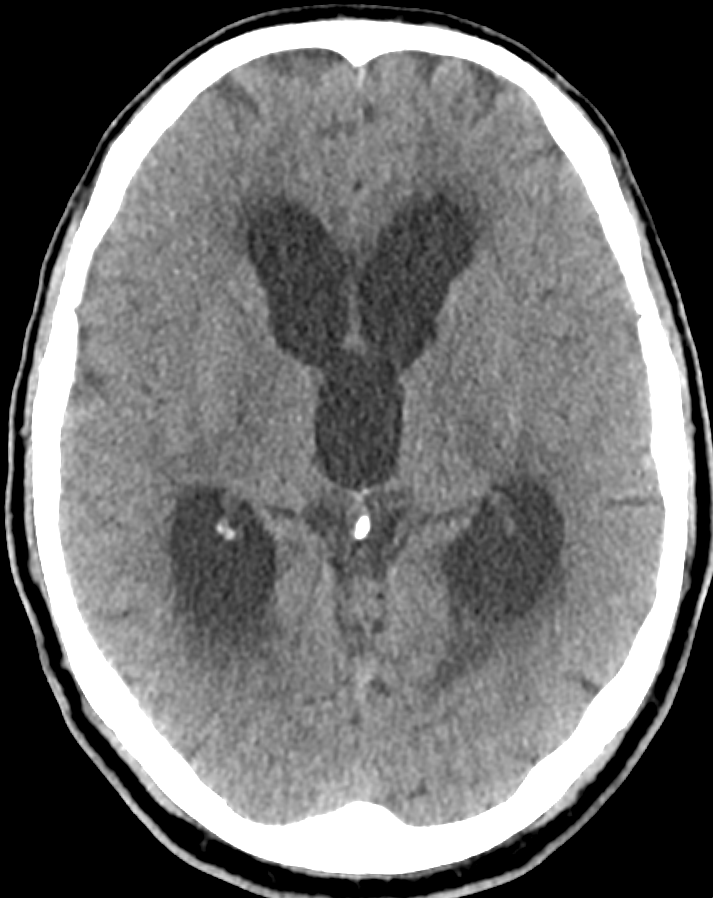
Malresorptive hydrocephalus is a form of communicating hydrocephalus in which the production of Cerebrospinal fluid is normal, but its resorption is impaired by structural changes in the outflow pathways.
Etiology
The most common cause of malresorptive hydrocephalus is inflammatory or hemorrhagic processes in the subarachnoid space, which lead to damage to the resorptive structures. These include, among others:
Subarachnoid hemorrhages (SAB)
History of infections involving the dura or CNS, such as Meningitis.
Postoperative changes
Pathophysiology
The underlying basis of the disease is functional impairment of the Arachnoid villi (Pacchionian granulations). As a result of prior inflammation or blood products, the following occur:
Adhesions and fibrosis of the membranes responsible for CSF resorption.
Resulting CSF accumulation.
Consequent elevation of intracranial pressure while connections between the inner and outer CSF spaces remain patent.
Epidemiology
Following an atraumatic, spontaneous Subarachnoid hemorrhage, there is a significant risk of developing chronic malresorptive hydrocephalus. Approximately 10 % of affected patients develop a persistent resorption disorder over the course of the disease that requires surgical intervention in the form of a VP shunts[^1].
Imaging
The gold standard for the diagnostic imaging of malresorptive hydrocephalus is CT and MRI.