Kyphoplasty is a minimally invasive procedure for the treatment of vertebral body fractures.
Procedure
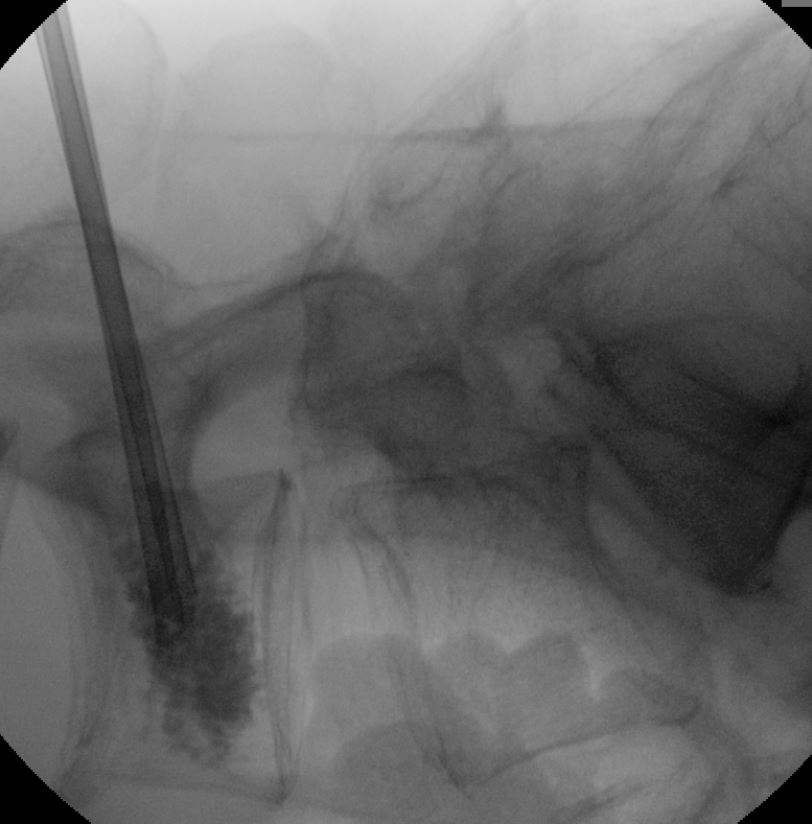
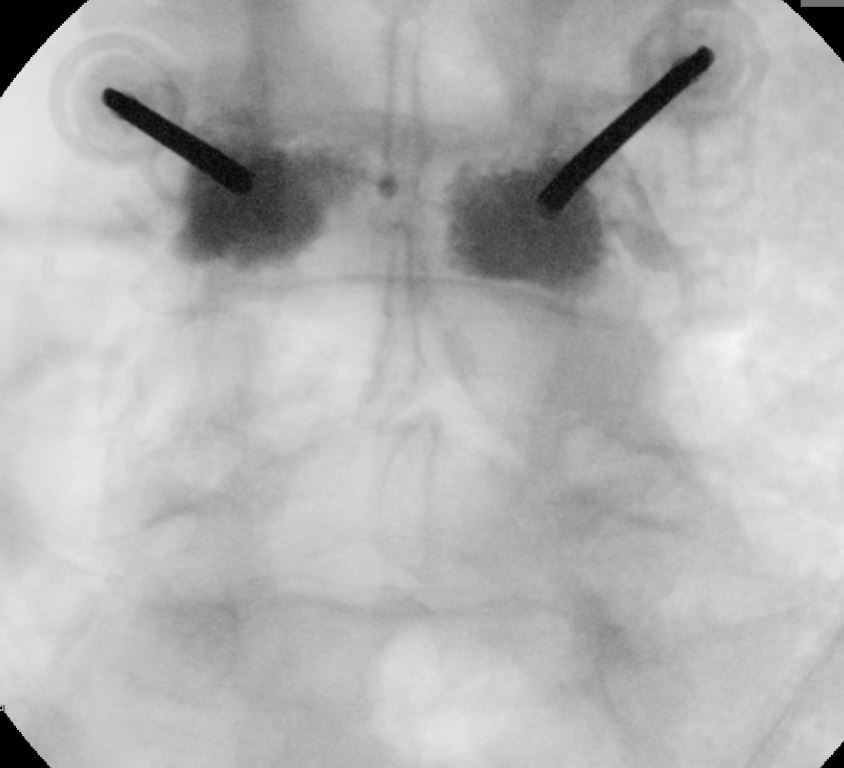
During kyphoplasty, Bone cement is injected percutaneously into the Vertebral body. This can be performed transpedicularly or extrapedicularly. Ideally, kyphoplasty should be performed using two C-arms to avoid repeatedly switching between anteroposterior and lateral imaging. Before the bone cement is applied, the vertebral body is expanded using a balloon system; bone cement is then delivered into the cavity created in this manner through a percutaneous cannula.
Biopsy
Routine performance of bone biopsies during kyphoplasty results in unexpected positive histology in approximately 3.1 % of cases[^1].
Indication
The procedure is particularly suitable, among other indications, for acute and subacute Compression fractures in order to restore their height.
Imaging


Procedure
A common technique for kyphoplasty is the use of one or two C-arms for a\/p and lateral imaging. Based on these two projections, a Jamshidi needle is inserted bilaterally through the pedicles, through which the bone cement is ultimately delivered into the vertebral body.