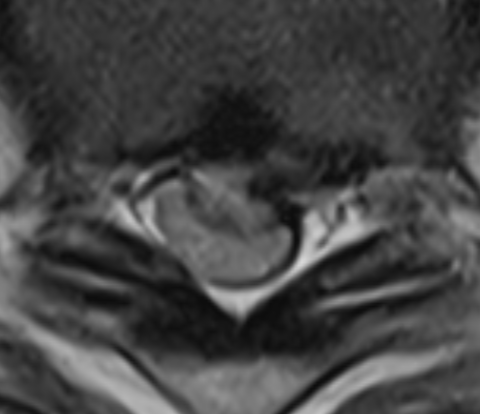
Indentation describes a rounded inward deformation of an anatomical structure on imaging.
Examples relevant to neurosurgery
For example, intracerebral hemorrhages or space-occupying lesions can indent the cerebral ventricles. Similarly, disc herniations can cause indentation of the spinal cord.
Indentation of the dural sac and spinal cord
In a spinal imaging report, indentation of the dural sac describes an inward deformation of the surrounding dural envelope. Indentation of the spinal cord concerns the cord contour itself. Identifying the affected structure is therefore essential.
Clinical interpretation
The wording alone does not determine treatment. Degenerative disc changes also occur in people without symptoms and must be interpreted alongside symptoms and examination findings[^1]. With cervical spinal cord compression, clinical signs of myelopathy must also be assessed[^2].