Herniation

Synonyms
Herniation
ICD-10
G93.5

The term herniation refers to compression of the brain due to lack of available space and increased intracranial pressure. Such a herniation is always a potentially life-threatening situation. Depending on the location of the herniation of brain tissue, different forms of herniation are distinguished:

Subfalcine herniation

This involves herniation and displacement of the Cingulate gyrus toward the contralateral side.

Subfalcine herniation
Coronal and axial CT images of subfalcine herniation caused by an acute subdural hematoma.

Uncal herniation

In uncal herniation, the Uncus, or the anterior portion of the temporal lobe, is displaced into the tentorial notch[^2].

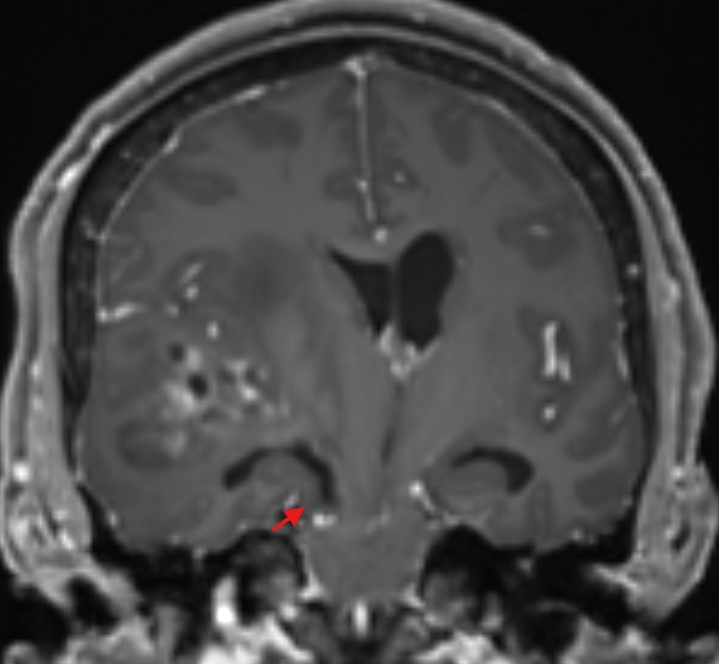
Uncal Herniation on MRI
Axial and coronal T2 MRI images showing uncal herniation (red arrow).
Uncal herniation MRI
Coronal brain MRI (contrast-enhanced T1 sequence) showing uncal herniation (red arrow).

Herniation into the foramen magnum

This involves herniation of the cerebellar tonsils into the Foramen magnum, with compression of the brainstem.

Upward transtentorial herniation of the cerebellum

In this form of herniation, the cerebellum herniates upward, resulting in brainstem compression[^1].

Editorial transparency

Authorship & revisions

Who created and updated this article, and which changes are documented.

Article created by
Last edited:
on
Revision history
4 edits · 1 contributor
Author list:
Show revision history 4 entries

4 edits by 1 author

Edit · Alaric Steinmetz ·

No content change recorded

Edit · Alaric Steinmetz · (+172 −0)

No content change recorded

Edit · Alaric Steinmetz · (+0 −170)

No content change recorded

Article created on · Alaric Steinmetz

Image viewer

Image

Open original