Suzuki Classification

The Suzuki classification is used to classify Moyamoya disease and was first published in 1969[^1].

Classification

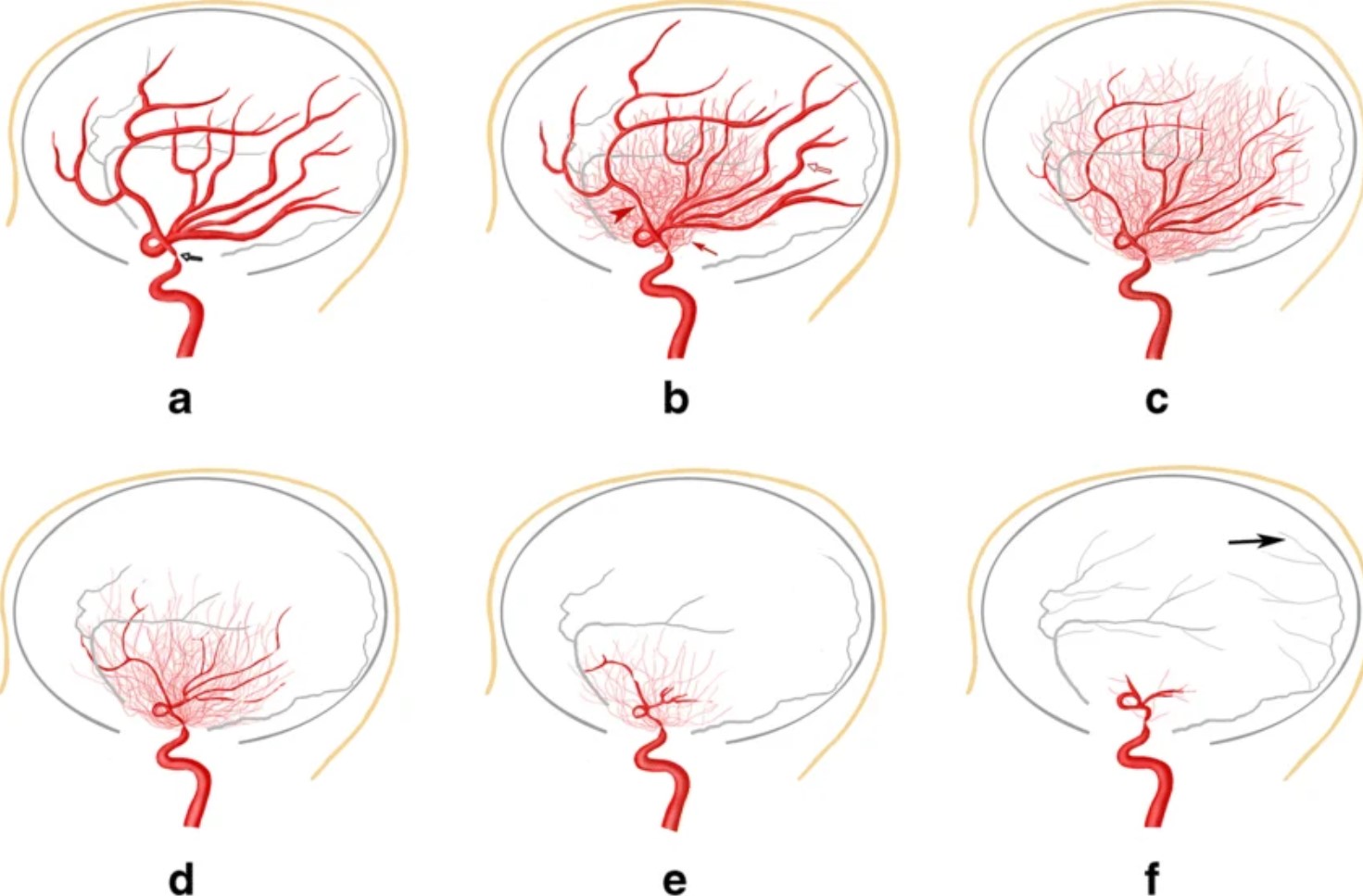
Classification is based on diagnostic angiography and is divided into 6 grades:

Suzuki Grade

Angiographic characteristics

Grade I

Stenosis of the terminal Internal carotid artery.

Grade II

Beginning "Moyamoya" collateral vessels.

Grade III

Increasing "Moyamoya" collateral vessels.

Grade IV

Development of transdural collateral vessels arising from the External carotid artery.

Grade V

Augmentation of the transdural collateral vessels and reduction of the "Moyamoya" collateral vessels.

Grade VI

Complete occlusion of the internal carotid artery and complete regression of the "Moyamoya" collateral vessels.

Figure

Suzuki classification
Schematic and illustrative depiction of the 6 grades of the Suzuki classification (a–e). Figure adapted from Shang et al. (DOI: 10.1007/s10143-018-0994-5)

Editorial transparency

Authorship & revisions

Who created and updated this article, and which changes are documented.

Article created by
Last edited:
on
Revision history
4 edits · 1 contributor
Author list:
Show revision history 4 entries

4 edits by 1 author

Edit · Alaric Steinmetz ·

No content change recorded

Edit · Alaric Steinmetz · (+9 −9)
  • Text changed: “The classification is based on diagnostic angiography and is divided into 6 grades:”“Classification is based on diagnostic angiography and is divided into 6 grades:”
Edit · Alaric Steinmetz ·

No content change recorded

Article created on · Alaric Steinmetz

Image viewer

Image

Open original