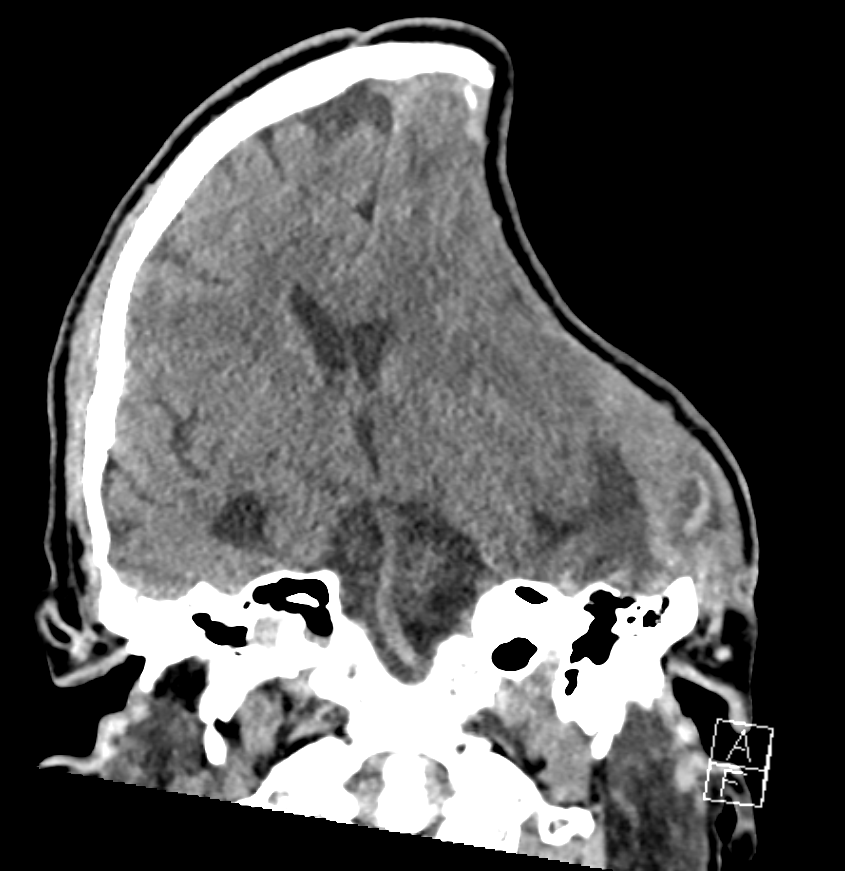
Sinking Skin Flap Syndrome is a rare but clinically relevant complication that may occur after a large craniectomy, such as a decompressive hemicraniectomy. It is characterized by sinking of the skin flap and the underlying brain parenchyma at the site of the cranial defect, as well as secondary neurological deterioration that occurs independently of the patient’s primary disease.
Pathophysiology
There are several hypotheses regarding the pathophysiology of Sinking Skin Flap Syndrome. One theory is that the neurological deterioration is caused directly by compression of the brain by the sinking skin flap. Another hypothesis proposes that the deterioration occurs indirectly as a result of reduced cerebral perfusion[^1] [^2]. In both cases, the altered anatomical and physiological conditions lead to impairment of normal brain function.
Clinical manifestations
Patients with Sinking Skin Flap Syndrome typically exhibit visible sinking of the skin flap over the craniectomy site. Neurologically, deterioration may occur, manifesting as symptoms such as headache, confusion, lethargy, or other focal neurological deficits. The diagnosis is often established using imaging modalities such as CT imaging, which reveal the characteristic appearance of the sunken skin flap and the underlying brain tissue.
Treatment
Rapid improvement in neurological symptoms can often be achieved by simply repositioning the patient horizontally[^1]. In most cases, definitive treatment consists of cranioplasty and thus closure of the craniectomy site[^3].