Processus transversus

Synonyms
Querfortsatz

The paired Processus transversus, an essential component of the vertebral body. It serves as an attachment site for the Ligamentum intertransversarium and the muscles of the autochthonous back muscles, which play a major role in stabilizing and facilitating movement of the spine.

Cervical spine

The cervical spine is characterized by a unique anatomical feature: the transverse processes of the cervical vertebrae contain the Foramen transversarium. Together, these foramina form the Canalis transversarius, through which the Arteria vertebralis passes.

Atlas of the Cervical Spine
Schematic illustration of the atlas. Figure adapted from Gray's Anatomy.

Thoracic spine

In the thoracic spine, the transverse processes form articular connections with the ribs. These joints are essential for the structural integrity of the thorax and enable efficient respiratory movement.
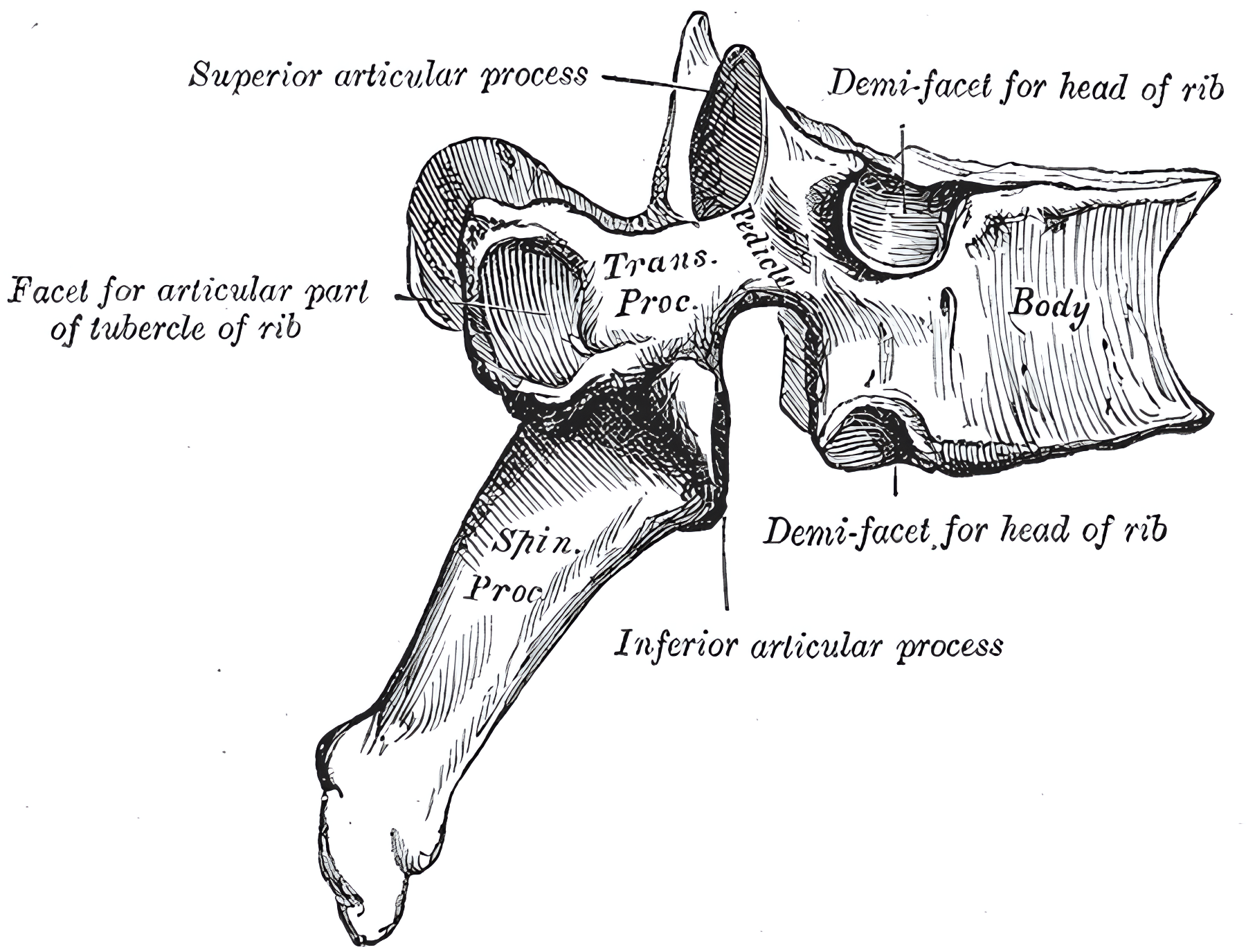
Thoracic vertebral body
Schematic illustration of a thoracic vertebral body. Figure adapted from Gray’s Anatomy, Figure 90.

Lumbar spine

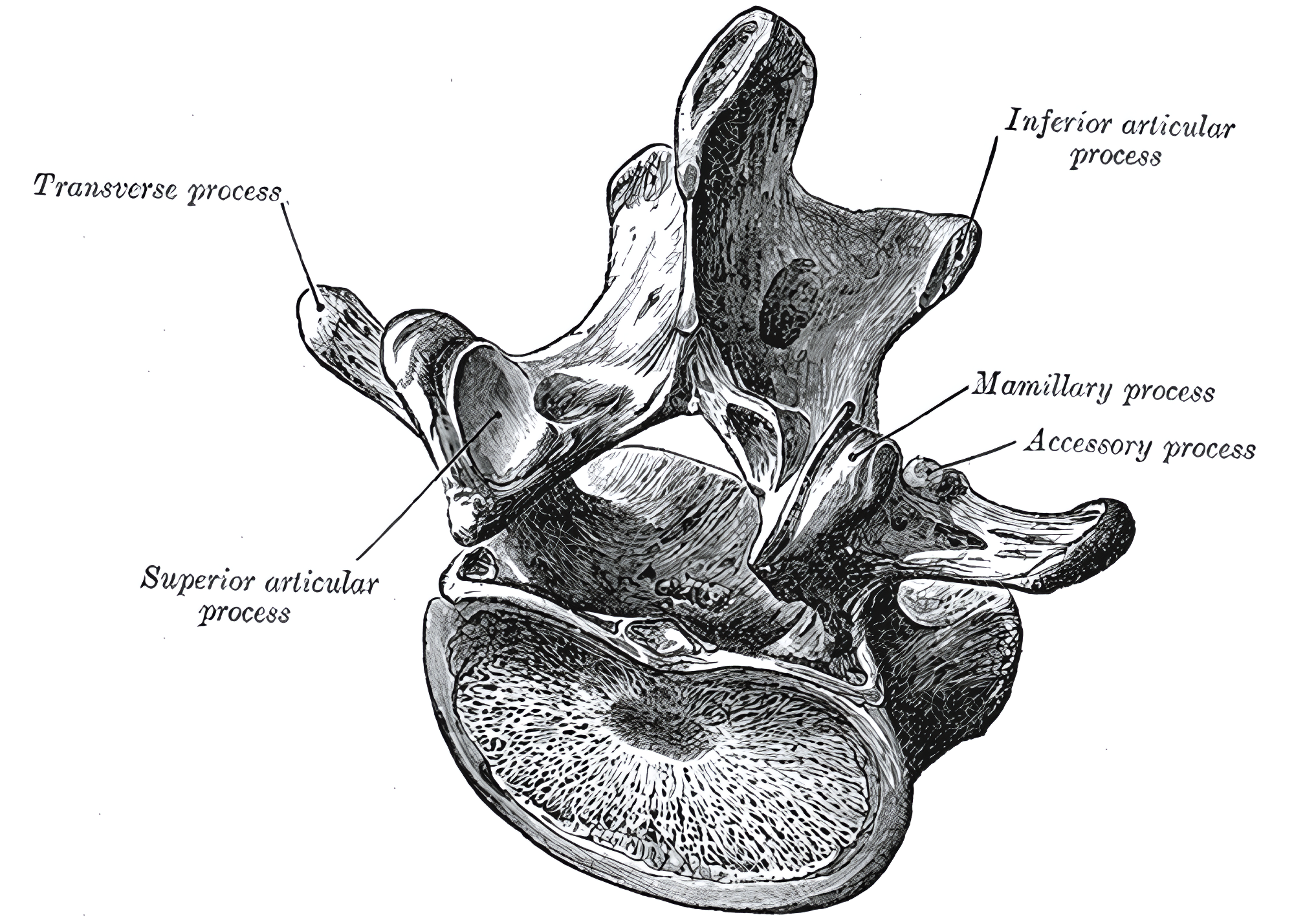
Lumbar vertebral body
Anatomical drawing of a lumbar vertebral body. Figure adapted from Gray's Anatomy.
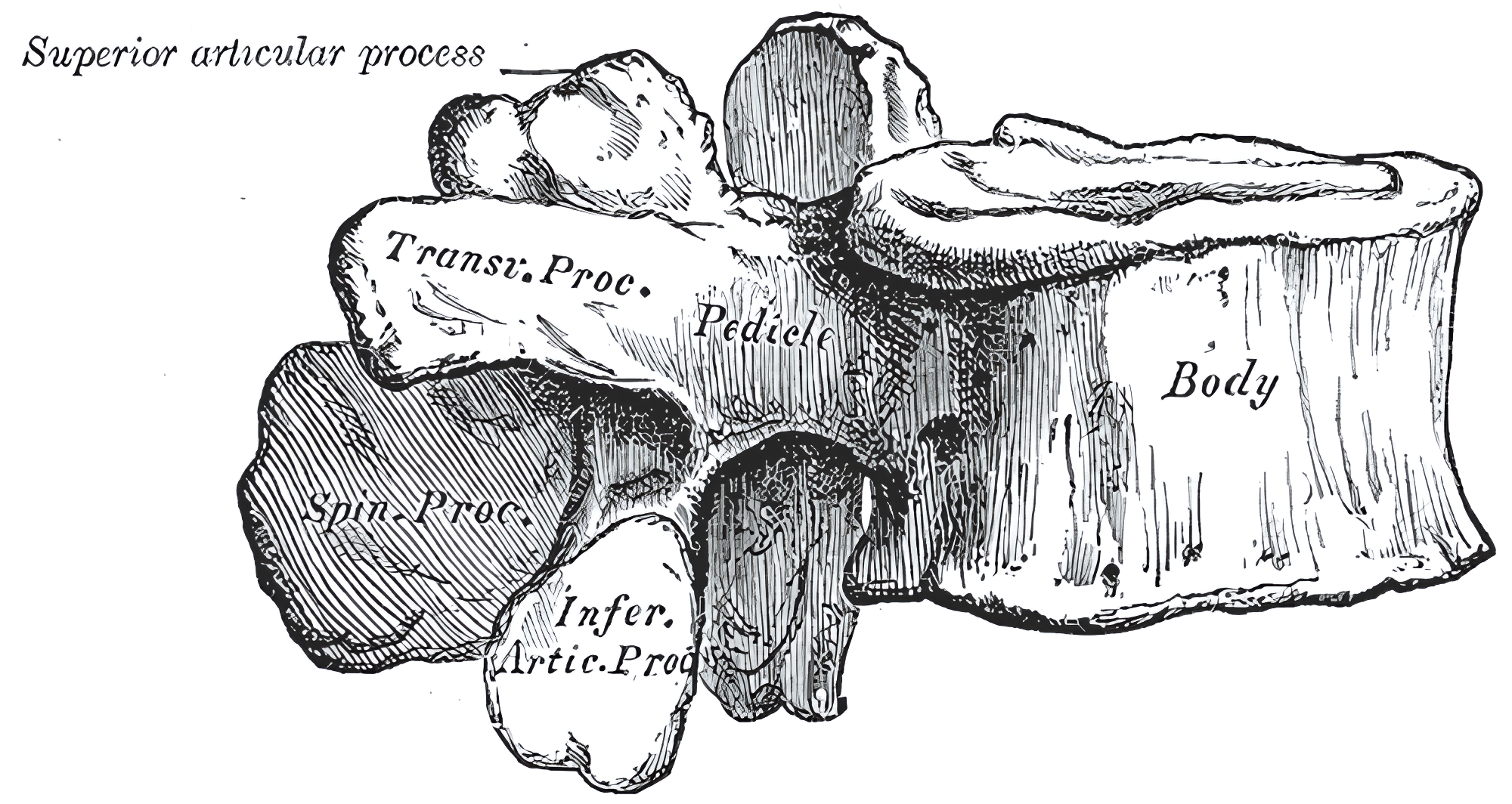
Lumbar vertebral body
Schematic illustration of a lumbar vertebral body in lateral view. Figure adapted from Gray's Anatomy Figure 92.

Imaging

Transverse process of the cervical spine
Axial CT showing the transverse process of the seventh cervical vertebra.

Fractures

Fractures of the Processus transversus are classified as A0 fractures according to the AO classification and generally do not require surgical intervention.

Editorial transparency

Authorship & revisions

Who created and updated this article, and which changes are documented.

Article created by
Last edited:
on
Revision history
2 edits · 1 contributor
Author list:
Show revision history 2 entries

2 edits by 1 author

Edit · Alaric Steinmetz ·

No content change recorded

Article created on · Alaric Steinmetz

Image viewer

Image

Open original