The primitive hypoglossal artery is present during embryological development and regresses over the course of development; in rare cases, it may persist as a persistent primitive hypoglossal artery[^1].
Embryology
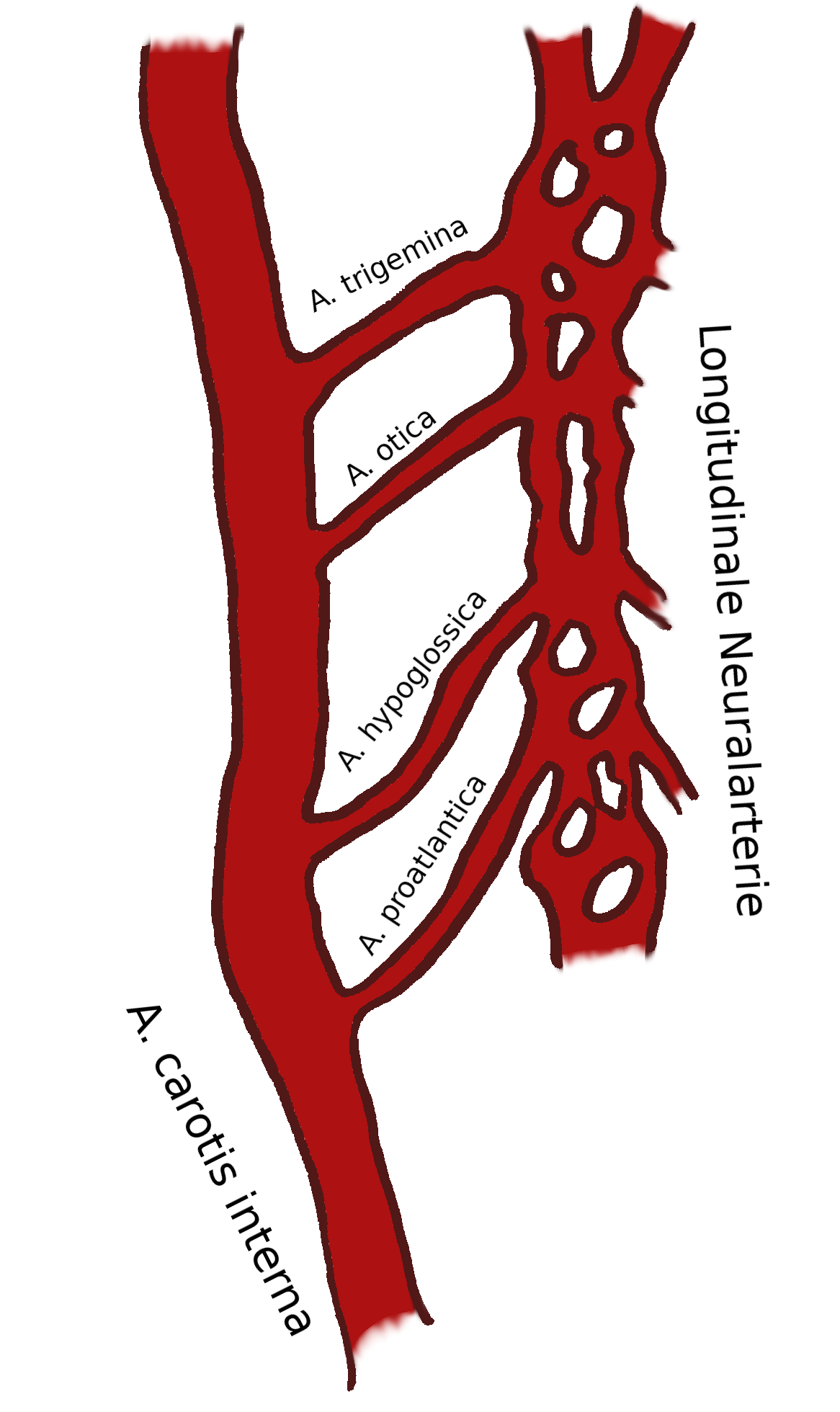
The primitive hypoglossal artery normally regresses when the embryo is approximately 6 mm in size[^1].
Anatomy
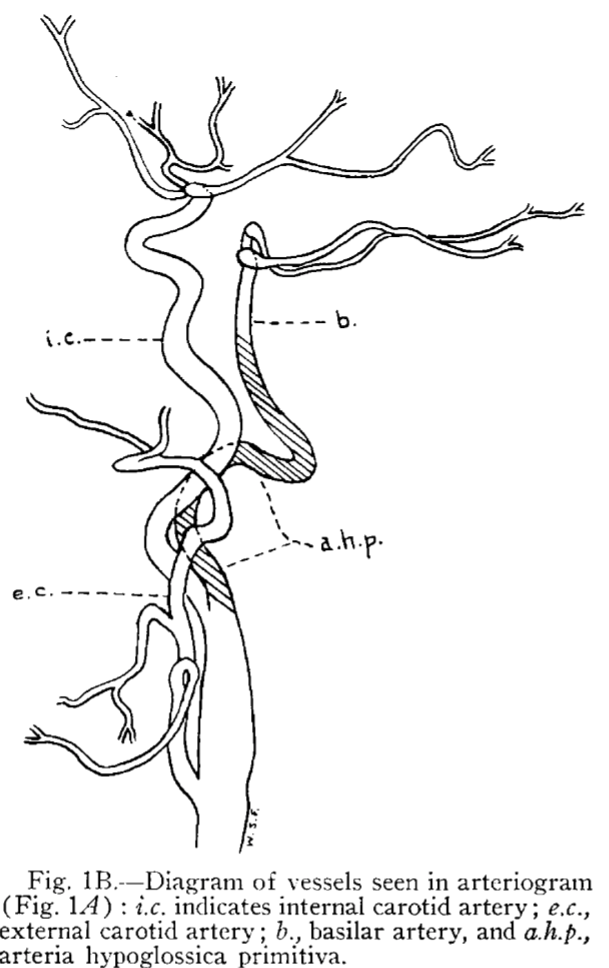
The primitive hypoglossal artery originates from the extracranial segment of the Arteria carotis interna, passes through the Canalis nervi hypoglossi, and joins the Arteria basilaris intracranially[^2].
Blood supply
If a persistent primitive hypoglossal artery is present, it provides the main blood supply to the posterior circulation, and the Vertebral arteries are hypoplastic or absent[^1].