An Ommaya reservoir is a catheter system used primarily for the locoregional chemotherapy of brain tumors, which is implanted directly into the ventricular system of the brain.
The Ommaya reservoir is a catheter system surgically implanted under the scalp that provides direct access to the Ventricular system of the brain. It is primarily used for administering medications (e.g., cytotoxic agents) into the cerebrospinal fluid space and for collecting Cerebrospinal fluid for diagnostic purposes.
Historical background
The system was developed by the Pakistani-American neurosurgeon Ayub K. Ommaya (1930-2008)[^1].
Design
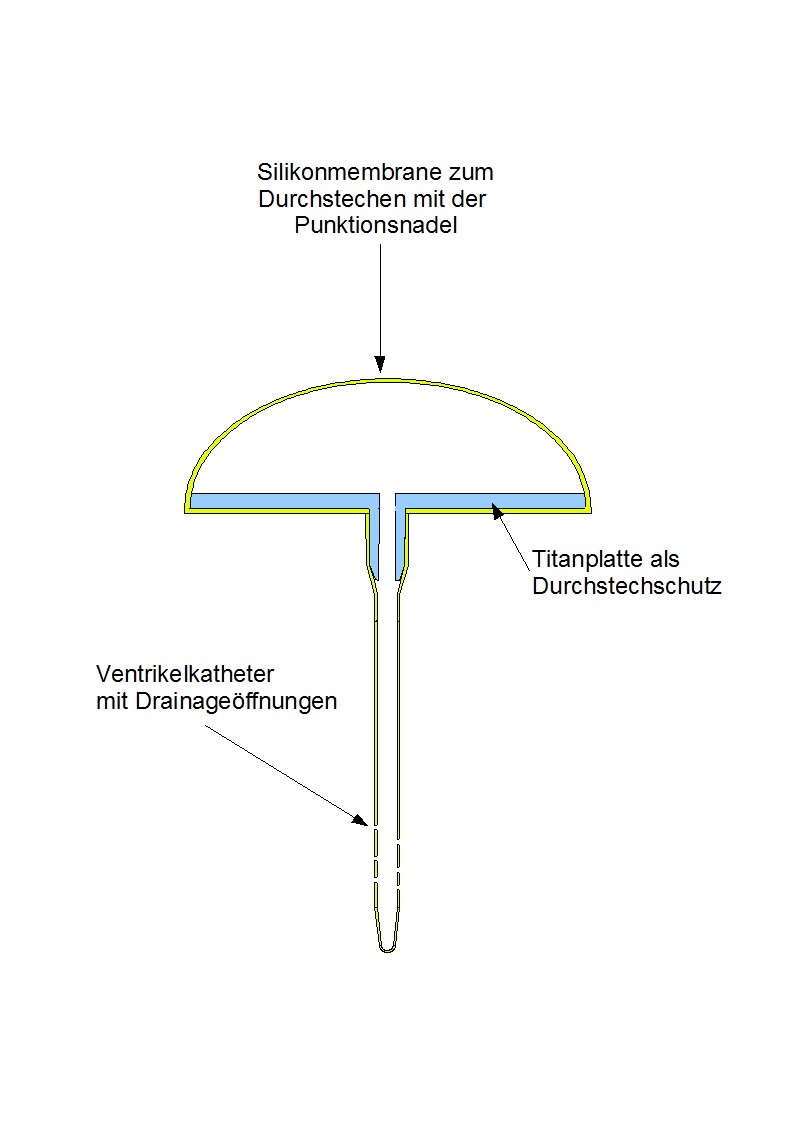
An Ommaya reservoir consists of two main components:
Reservoir: A dome-shaped silicone chamber (approximately 2 cm in diameter) that lies flat on the skull beneath the Galea aponeurotica.
Ventricular catheter: A thin silicone catheter that passes through a Burr hole in the bone directly into one of the Lateral ventricles (usually the frontal horn of the right lateral ventricle).
Indications
The Ommaya reservoir is used when long-term or repeated intrathecal administration of substances into the cerebrospinal fluid is necessary to bypass the blood-brain barrier, for example in:
Leptomeningeal carcinomatosis: Locoregional chemotherapy for tumor dissemination to the meninges.
Cystic Brain tumors: Decompression by drainage of tumor fluid.
Infections: Administration of antibiotics or antifungal agents in treatment-resistant ventriculitis.
Diagnostics: Regular collection of cerebrospinal fluid without the need for repeated Lumbar punctures.