Neural foraminal stenosis is a narrowing of the Intervertebral foramen in the spine and, when the exiting nerve root is compressed, can cause radicular pain or sensorimotor deficits.
Localization
Neural foraminal stenosis can occur in the cervical, thoracic, and lumbar spine.
Epidemiology
Lumbar neural foraminal stenosis has a prevalence of 8-26 % and is therefore a common cause of lumbar radiculopathies[^2] [^3] [^4].
Etiology
Neural foramal stenosis can occur, for example, due to herniated discs, disc degeneration with reduction in disc height, hypertrophy of the ligamentum flavum or the facet joints[^1].
Imaging
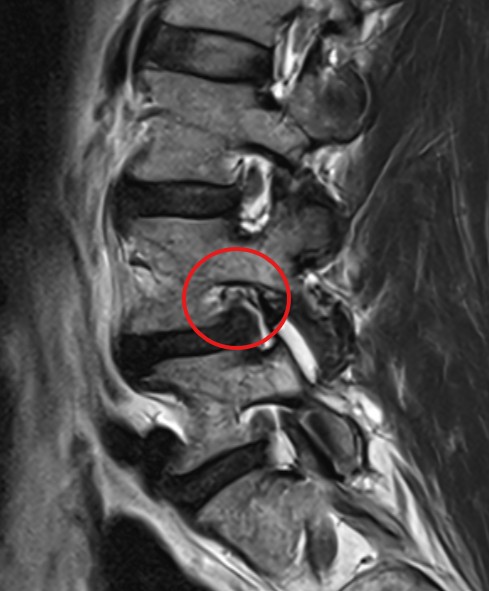
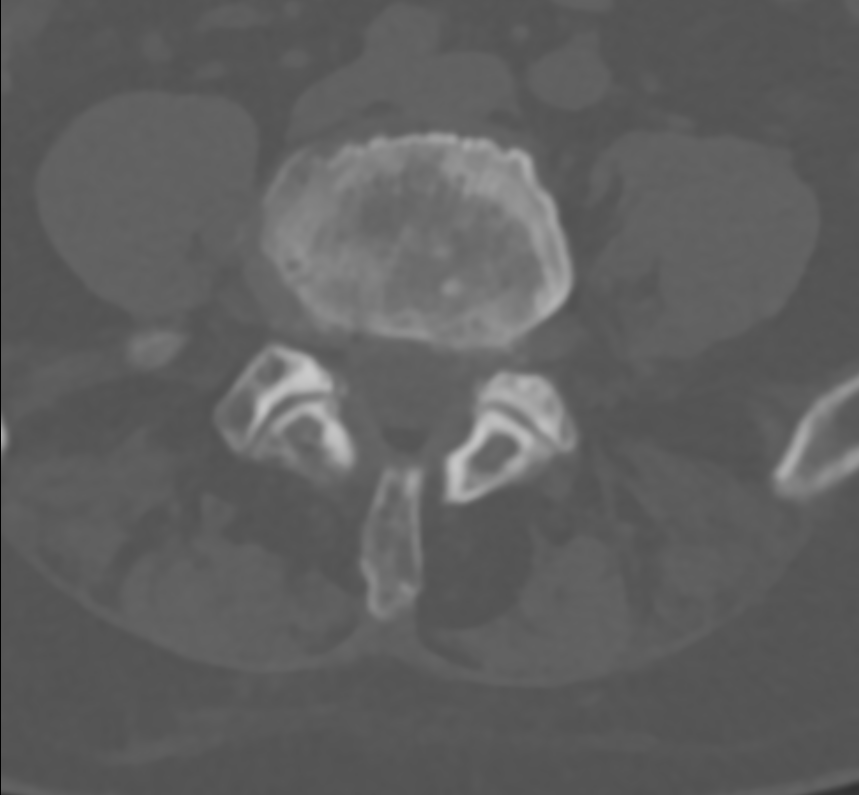
Bony neural foraminal stenosis is optimally visualized on CT imaging. Neural foraminal stenosis caused by a Herniated disc is optimally visualized on MRI imaging.
Treatment
In patients with symptoms refractory to treatment, surgical decompression of the affected neural foramen may be considered. As a less invasive treatment option, Nerve root infiltration may also be considered.