A hygroma is a medical term for an accumulation of fluid that can occur in various regions of the body. In neurosurgery, the subdural hygroma is of particular importance. It is a collection of fluid that forms between the dura mater (Dura mater) and the arachnoid mater (Arachnoid mater) of the of the brain. On imaging studies, this type of hygroma often has an appearance that strongly resembles a chronic subdural hematoma.
Cause
Hygromas can develop for various reasons.
One of the most common causes is traumatic brain injury. This can occur, for example, as a result of a fall, a traffic accident, or sports-related injuries[^1].
Another important factor in the development of hygromas is CSF dynamics. In some cases, complications may occur in patients with CSF diversion, such as a ventriculoperitoneal shunt (VP shunt). A VP shunt is a surgically placed catheter used to divert excess CSF from the ventricular system to other regions of the body, thereby reducing intracranial CSF pressure. If the shunt is not properly adjusted and diverts too much cerebrospinal fluid, this can lead to underdrainage, which in turn can cause a hygroma[^2].
Hygromas can also develop postoperatively, particularly after procedures involving the skull. Such operations can alter CSF dynamics, potentially leading to the formation of a hygroma[^3].
Imaging
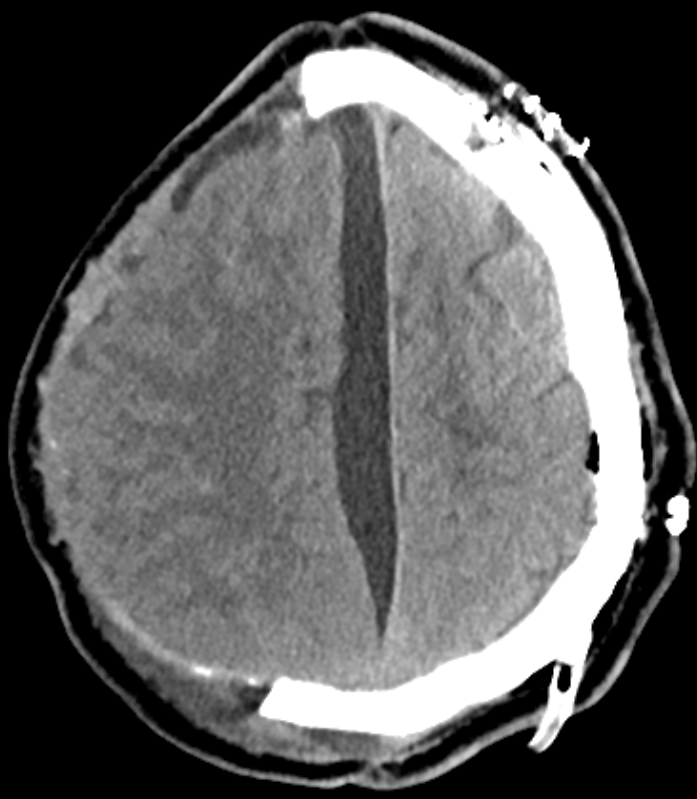
On CT or MRI imaging, hygromas often appear as fluid-filled spaces that resemble chronic subdural hematomas.
CT
On CT imaging, hygromas are typically visible as hypodense areas

MRI
On MRI, they have a somewhat different appearance, depending on the specific composition of the fluid and the sequences used. However, distinguishing a subdural hygroma from a chronic subdural hematoma can be difficult, as both conditions can appear very similar on imaging.
Treatment
Treatment of a hygroma depends on its cause and size. In some cases, conservative treatment may be sufficient, with the hygroma being resorbed spontaneously over time. In other cases, particularly when the hygroma causes symptoms or increases in size, surgical intervention may be necessary.