The Fasciculus longitudinalis inferior cerebri (ILF) is a long-range associative fiber tract of the brain.
Anatomy
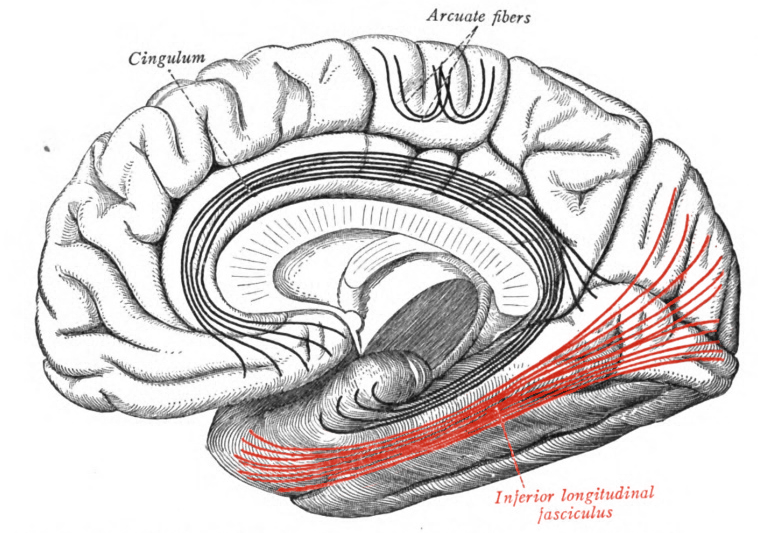
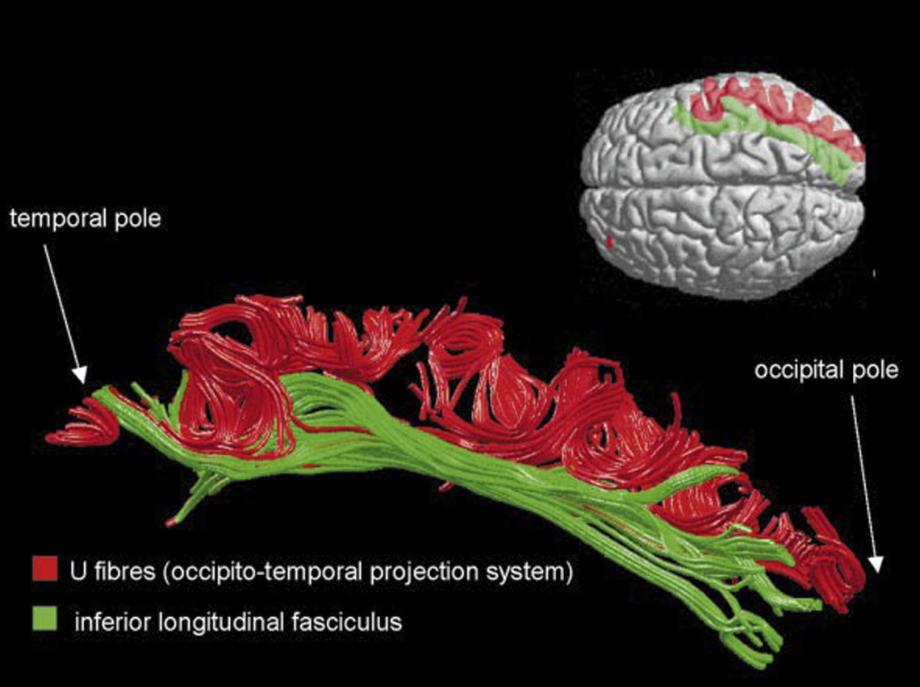
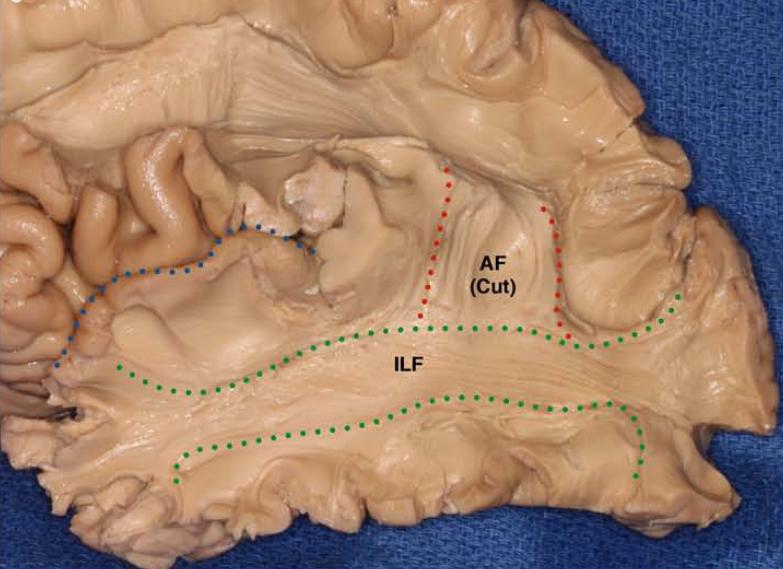
The Fasciculus longitudinalis inferior cerebri connects the occipital and temporo-occipital regions of the brain with the anterior temporal regions[^1].
Figure
Function
Given the anatomical connections of the Fasciculus longitudinalis inferior cerebri, it has been proposed that this fiber bundle plays a significant role in a relatively large number of brain functions. The Fasciculus longitudinalis inferior cerebri is a multilayered, bidirectional bundle involved in the processing and modulation of visual cues and thus in visually guided decisions and behaviors[^1] [^2].
Clinical relevance
A sudden interruption of the Fasciculus longitudinalis inferior cerebri, for example due to a stroke, can lead to neuropsychological impairments of visual cognition (e.g., visual agnosia, Prosopagnosia, and alexia). Furthermore, interruption of the Fasciculus longitudinalis inferior cerebri may represent the pathophysiological basis for visual hallucinations and socioemotional impairments in schizophrenia, as well as emotional difficulties in autism spectrum disorder. Degeneration of the Fasciculus longitudinalis inferior cerebri in neurodegenerative diseases affecting the Temporal lobe may explain the gradual onset of semantic and lexical disorders. Although some of the functions mediated by the Fasciculus longitudinalis inferior cerebri appear to be relatively lateralized, observations from neurosurgery suggest that interruption of the anterior part of the tract can be dynamically compensated for by the contralateral part[^1] [^2].