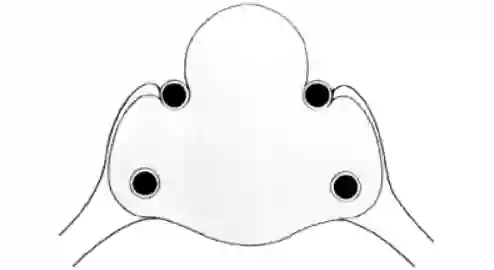
Knosp Classification
Last edit by Alaric Steinmetz on
The Knosp classification was published in 1993 and is used to classify pituitary adenomas involving the cavernous sinus, which is present in 6-10% of all pituitary adenomas[^1].
Classification
Knosp grade | Description |
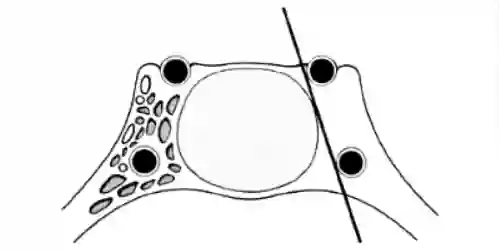
Grade 0 | Normal cavernous sinus with contrast enhancement of all venous compartments. At this grade, the pituitary adenoma does not extend into the cavernous sinus. |
Grade 1 | The medial tangent of the line between the center of the intra- and supracavernous ICA is not crossed by the tumor extension. |
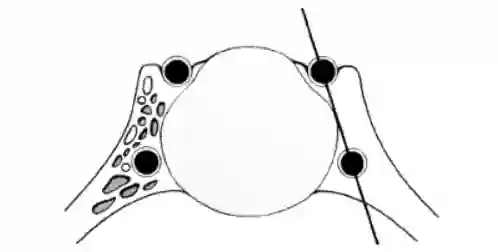
Grade 2 | The tumor extends beyond the intercarotid line, but does not cross the lateral border of the intra- and supracavernous ICA. With tumor growth superior to the intracavernous ICA, the superior portion of the venous plexus of the cavernous sinus shows less contrast enhancement or no enhancement. With growth inferior to the ICA, contrast enhancement of the inferior portion of the venous plexus of the cavernous sinus is reduced or absent. |
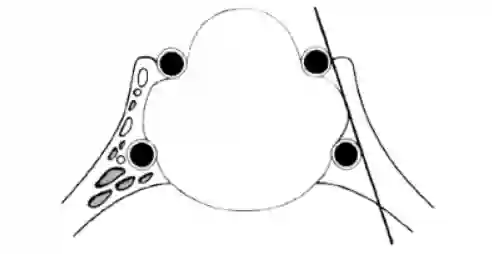
Grade 3 | The tumor extends beyond the lateral line between the intra- and supracavernous ICA. Depending on the direction of tumor growth, the medial, superior, or inferior portion of the venous plexus of the cavernous sinus shows no contrast enhancement. |
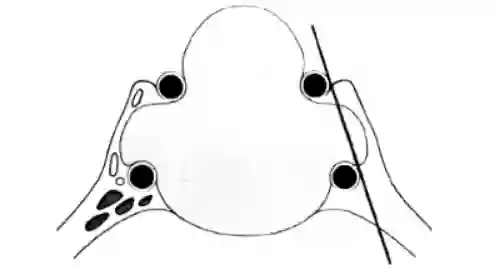
Grade 4 | The tumor surrounds the intracavernous ICA. No portion of the venous plexus of the cavernous sinus is enhanced. In rare cases, however, the most inferolateral portion of the cavernous sinus may possibly enhance. |
Figure