Petrous bone fracture

Petrous bone fractures are fractures of the Os temporale.

Classification

Petrous bone fractures are classified as longitudinal or transverse fractures, also referred to as longitudinal petrous bone fractures and transverse petrous bone fractures, respectively.

Etiology

Longitudinal fractures are by far the more common type, accounting for approximately 70-90 % of post-traumatic fractures. Transverse petrous bone fractures are significantly less common, but are frequently associated with deficits involving the Facial nerve or Vestibulocochlear nerve[^1].
Imaging

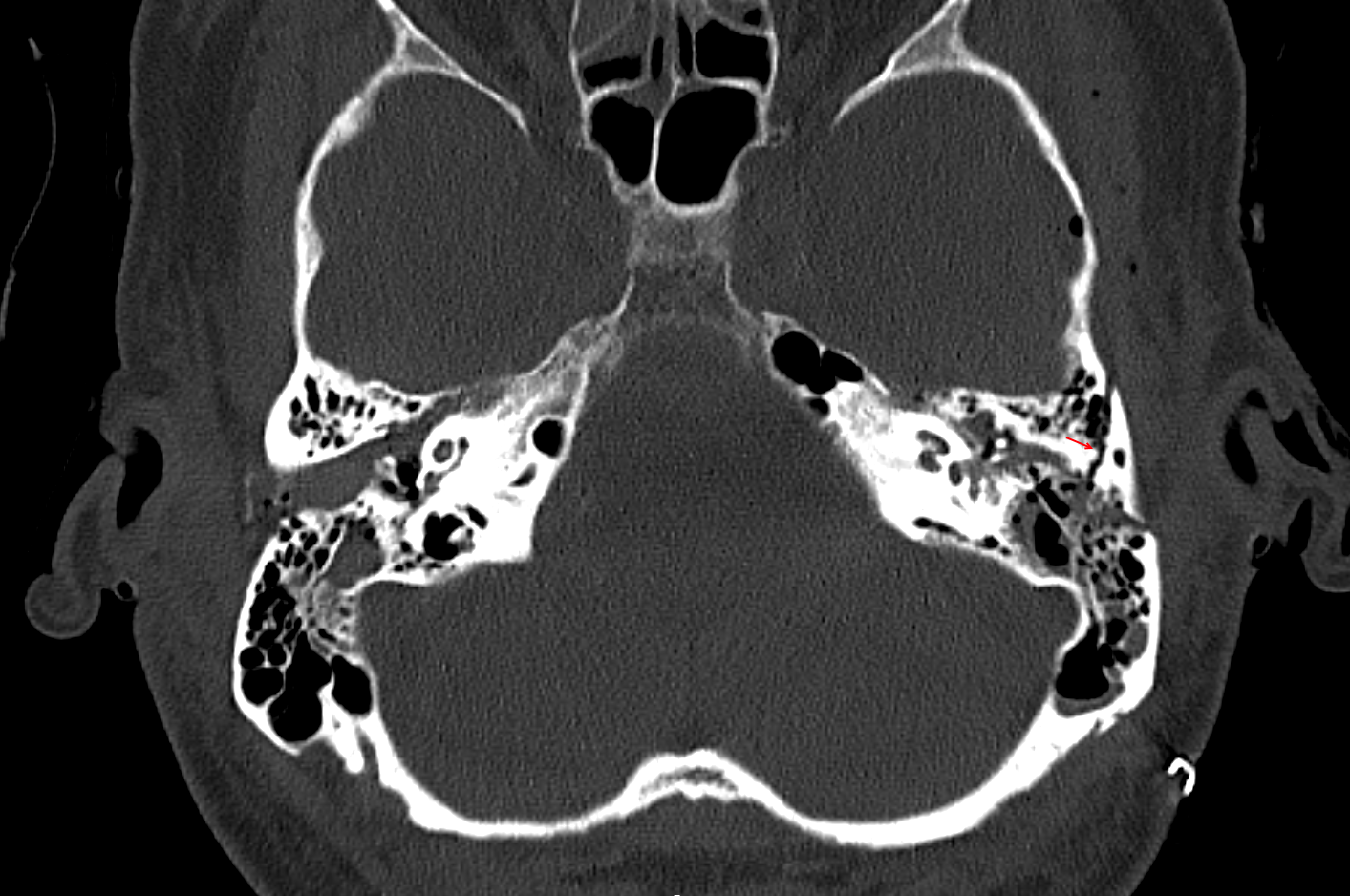
Petrous bone fracture on CT
Visualization of a transverse petrous bone fracture (red arrow) on axial CT imaging.

Editorial transparency

Authorship & revisions

Who created and updated this article, and which changes are documented.

Article created by
Last edited:
on
Revision history
4 edits · 1 contributor
Author list:
Show revision history 4 entries

4 edits by 1 author

Edit · Alaric Steinmetz ·

No content change recorded

Edit · Alaric Steinmetz · (+7 −7)
  • Text changed: “Petrous bone fractures are classified as either longitudinal or transverse fractures, also referred to as longitudinal petrous bone fractures and transverse petrous bone fractures, respectively.”“Petrous bone fractures are classified as longitudinal or transverse fractures, also referred to as longitudinal petrous bone fractures and transverse petrous bone fractures, respectively.”
  • Text changed: “At approximately 70-90 %, longitudinal fractures are by far the more common post-traumatic fractures. Transverse petrous bone fractures are significantly less common, but are frequently associated with deficits involving the Nervus facialis or Nervus vestibulocochlearis [^1].”“Longitudinal fractures are by far the more common type, accounting for approximately 70-90 % of post-traumatic fractures. Transverse petrous bone fractures are significantly less common, but are frequently associated with deficits involving the Facial nerve or Vestibulocochlear nerve [^1].”
Edit · Alaric Steinmetz ·

No content change recorded

Article created on · Alaric Steinmetz

Image viewer

Image

Open original