Giant cell tumor of bone is an intermediate malignant tumor of bone. It exhibits more locally aggressive growth but metastasizes only rarely[^2].
Localization
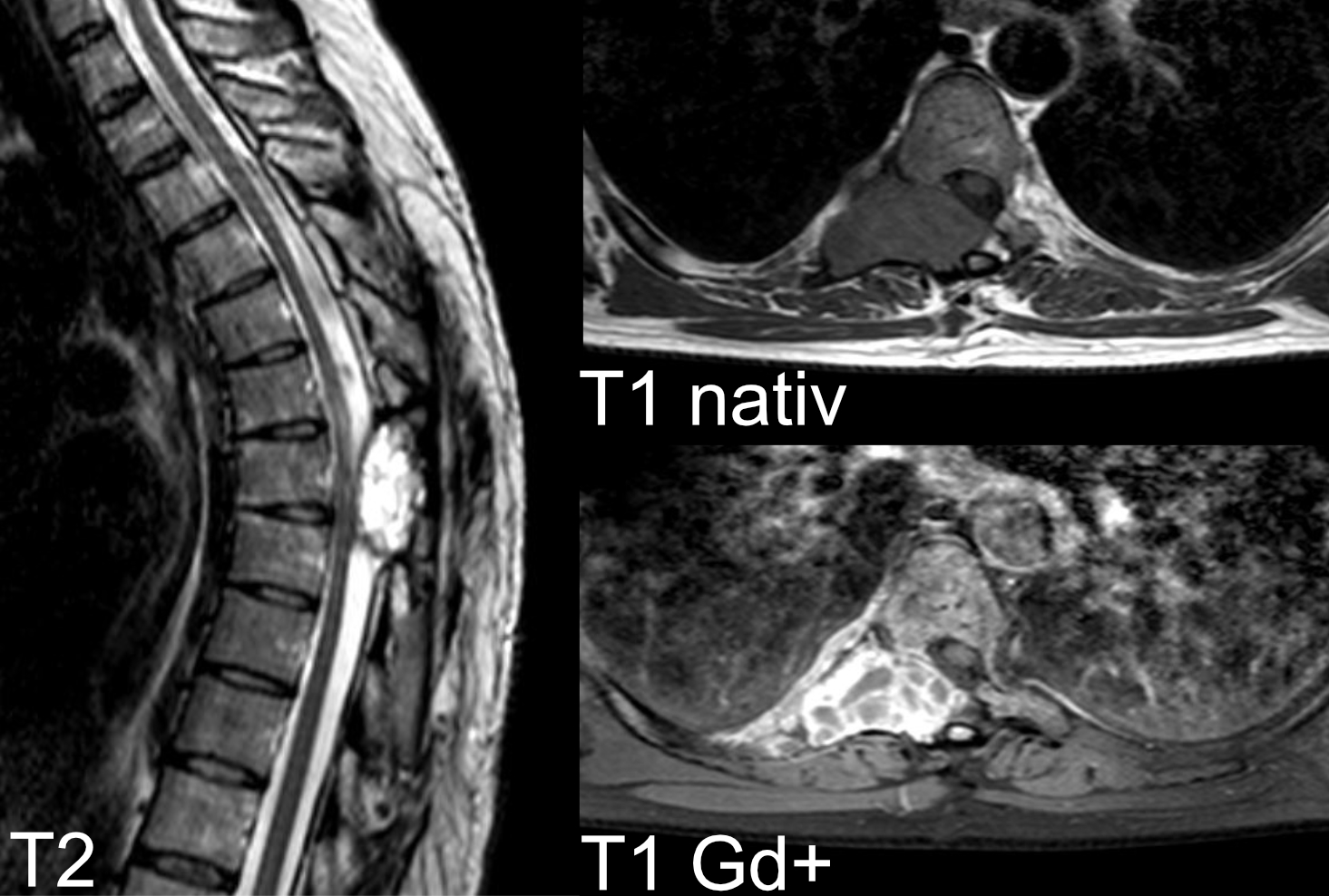
Giant cell tumors of bone most commonly occur in the distal femur (30%), proximal tibia (28%), distal radius (9%), and distal tibia (6%). The pelvis (2%), sacrum (2%), as well as the Spine (3%) are affected considerably less frequently[^3].
Epidemiology
Giant cell tumors of bone account for approximately 4–10 % of all primary bone tumors, while simultaneously comprising approximately 20 % of all benign bone tumors[^2]. Their incidence peaks between 20 and 55 years of age. With a ratio ranging from 1:1.1 to 1:1.5, women are slightly more likely than men to develop a giant cell tumor of bone. In the global distribution of this tumor entity, particularly elevated prevalences are observed in China and southern India (up to 30 %), for which no causality has yet been established[^1].
Metastasis
Pulmonary metastases were observed in approximately 1-5 % of patients with giant cell tumor of bone[^1] [^5] [^6] [^7]. The development of a secondary malignant giant cell tumor of bone was observed in approximately 2.4 % of cases[^4].
Imaging
Treatment
The use of bone cement in the resection cavity is associated with a lower recurrence rate [^8].