Suprascapular notch syndrome is a peripheral nerve entrapment syndrome.
Etiology
Suprascapular notch syndrome is caused by compression of the suprascapular nerve by the superior transverse scapular ligament at the suprascapular notch. Suprascapular notch syndrome is found more frequently in volleyball and baseball players1 2. Ossification of the superior transverse scapular ligament is more frequently found in patients with suprascapular notch syndrome3.
Symptoms
Typically, weakness and atrophy of the infraspinatus muscle and supraspinatus muscle occur. As a result, patients often report limited external rotation of the upper arm. Pain may also occur in the region of the acromioclavicular and glenohumeral joints, which are innervated by the suprascapular nerve4.
Treatment
After conservative treatment measures have been exhausted, surgical decompression of the suprascapular nerve by opening the superior transverse scapular ligament may be considered.
Surgery
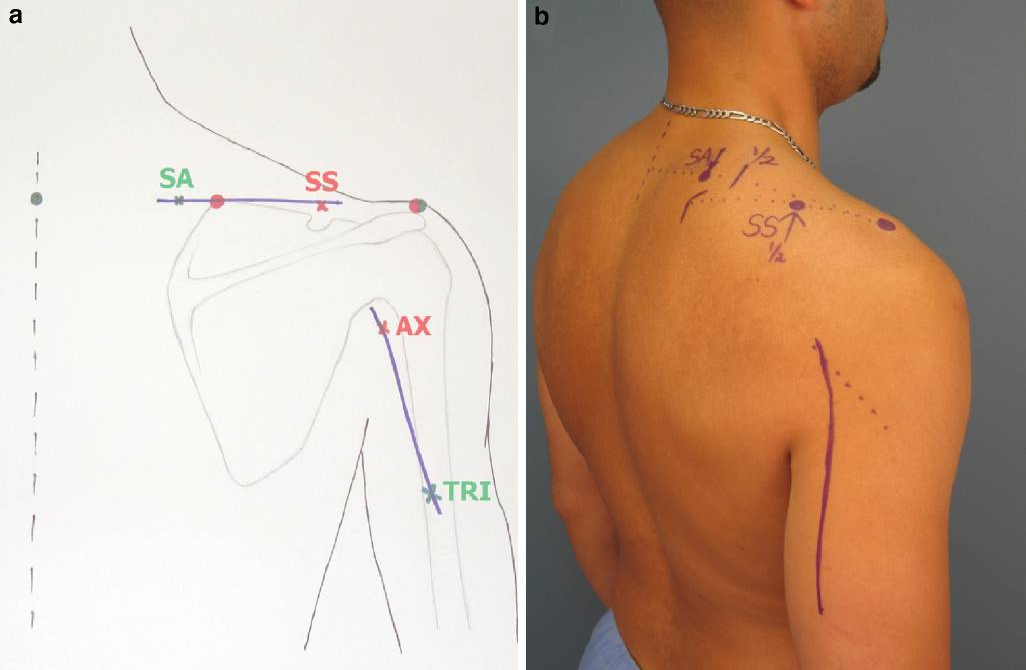
The location of the suprascapular notch can be identified using the following landmarks5:
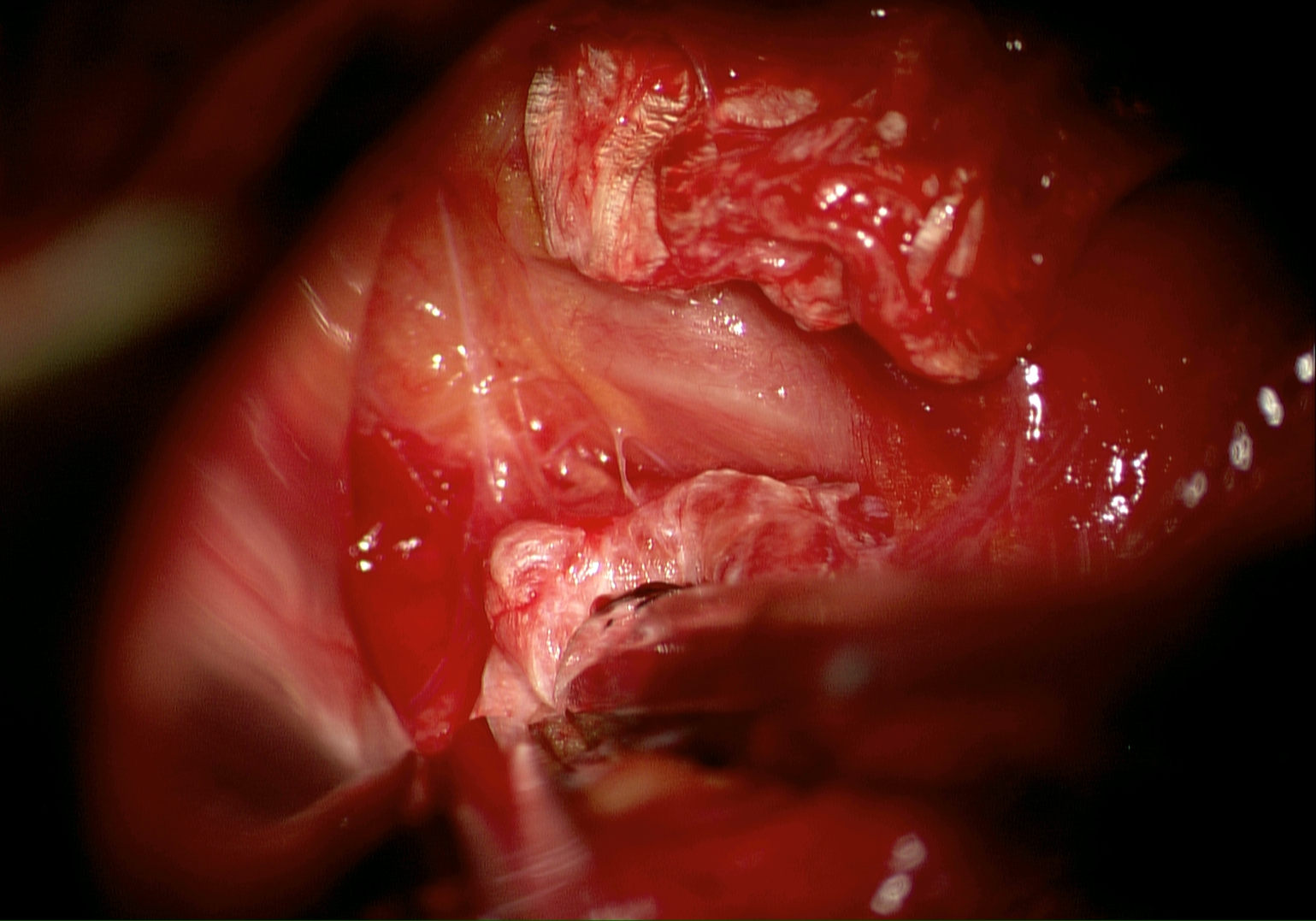
Dissection is performed through the trapezius muscle to the bony edge of the superior border of the scapula, followed by identification of the suprascapular notch along the superior border.


References
Witvrouw, Erik, et al. "Suprascapular neuropathy in volleyball players." British journal of sports medicine 34.3 (2000): 174-180. ↩ ↩
Cummins, Craig A., and David S. Schneider. "Peripheral nerve injuries in baseball players." Physical medicine and rehabilitation clinics of North America 20.1 (2009): 175-193. ↩ ↩
Polguj, Michał, et al. "Morphological and radiological study of ossified superior transverse scapular ligament as potential risk factor of suprascapular nerve entrapment." BioMed research international 2014 (2014). ↩ ↩
Habermeyer, P., et al. "Incisura scapulae syndrome." Handchirurgie, Mikrochirurgie, Plastische Chirurgie: Organ der Deutschsprachigen Arbeitsgemeinschaft fur Handchirurgie: Organ der Deutschsprachigen Arbeitsgemeinschaft fur Mikrochirurgie der Peripheren Nerven und Gefasse: Organ der V... 22.3 (1990): 120-124. ↩ ↩
Colbert, Stephen H., and Susan Mackinnon. "Posterior approach for double nerve transfer for restoration of shoulder function in upper brachial plexus palsy." Hand 1.2 (2006): 71-77. ↩ ↩