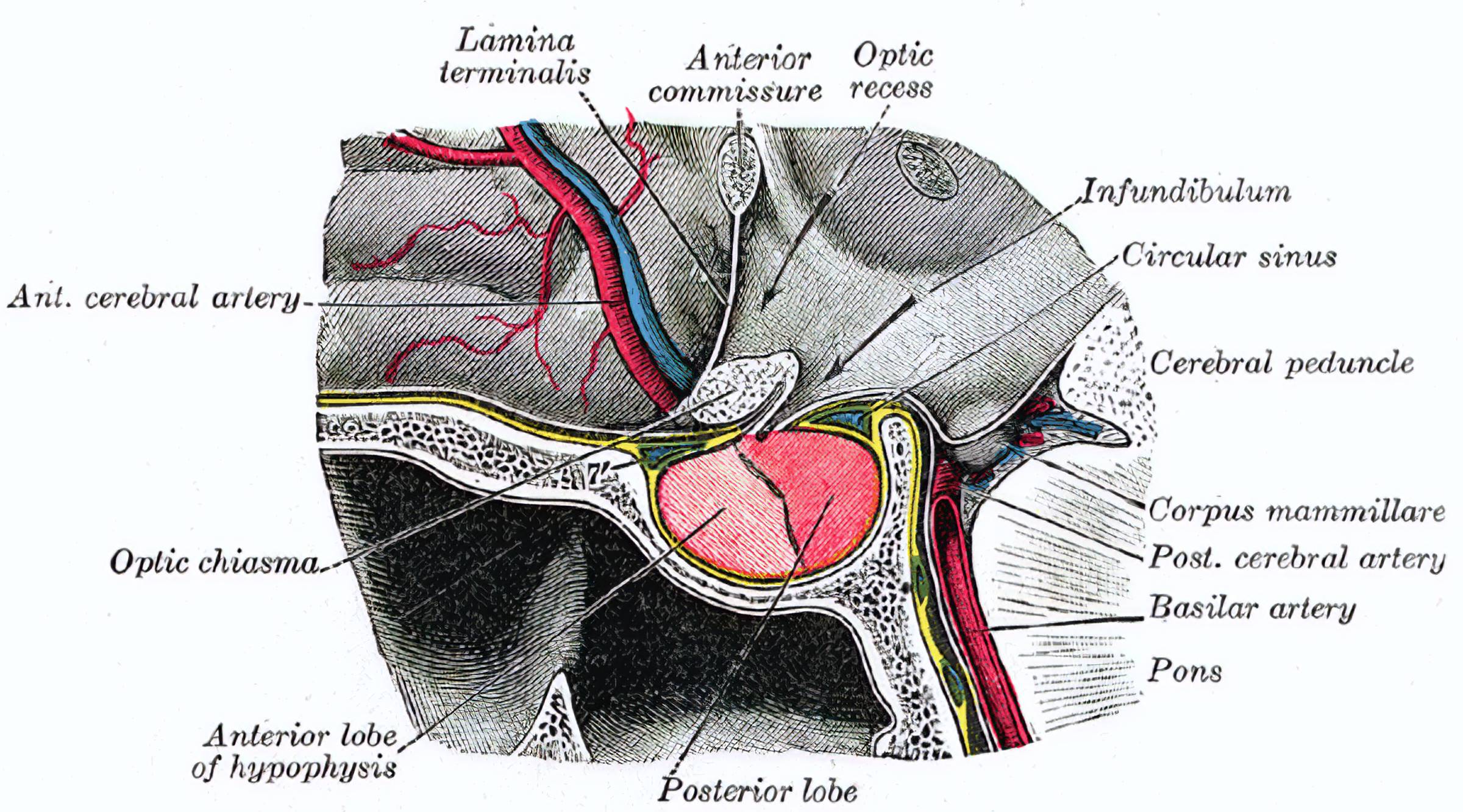
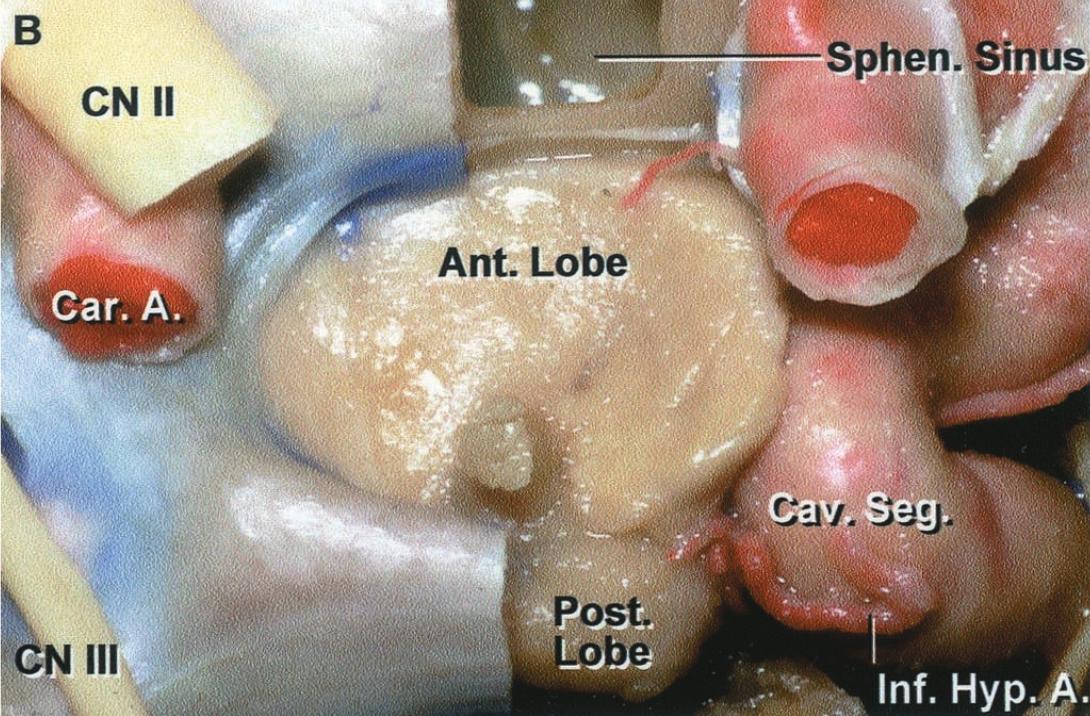
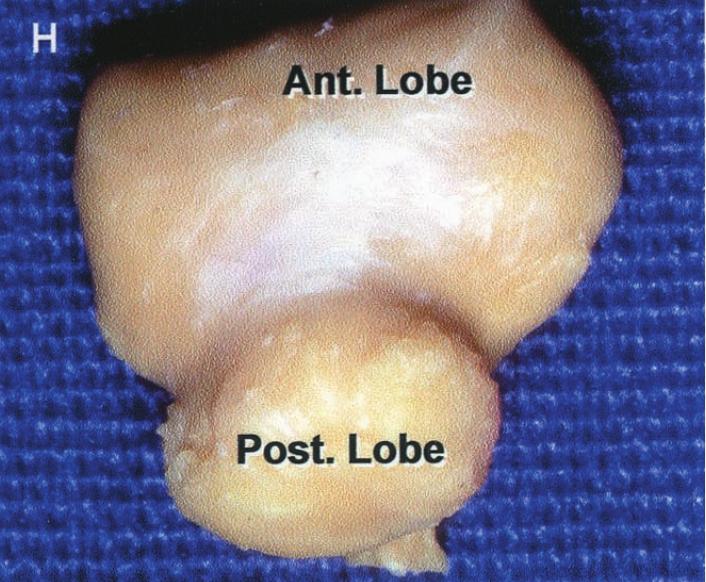
The pituitary gland consists of two parts: the adenohypophysis (anterior lobe), which develops from an evagination of the roof of the primitive foregut (Rathke’s pouch), and the neurohypophysis (posterior lobe), which is an evagination of the floor of the diencephalon. The adenohypophysis is an endocrine gland, whereas the neurohypophysis is a part of the brain that contains nerve fibers, a capillary network, and a specialized glial cell type, the pituicytes. The two parts of the pituitary gland are adjacent to one another along a contact surface, in the region of which the nervous system and the endocrine-vascular system are interconnected[^1].
Figure