Nervus intermedius neuralgia, also known as Hunt's neuralgia, is a very rare form of neuralgia that can closely resemble the symptoms of Glossopharyngeal neuralgia[^3].
Symptoms
Nervus intermedius neuralgia typically causes lancinating attacks of pain deep within the ear. The pain may radiate partially into the auricle and posteriorly toward the parietal region. During pain attacks, some patients experience increased salivation, tinnitus, a bitter taste in the mouth, or dizziness[^1]. Touching the posterior wall of the external auditory canal or the periauricular region may trigger the pain attacks[^3].
Treatment
Both pharmacological and surgical treatment options are available for nervus intermedius neuralgia.
Pharmacological treatment
Pharmacological treatment of nervus intermedius neuralgia may respond to carbamazepine in some mild cases, sometimes in combination with phenytoin[^1]. In some cases, nervus intermedius neuralgia also responds to valproate[^1]. Another pharmacological treatment option is the application of a local anesthetic to the external auditory canal[^1].
Surgical treatment
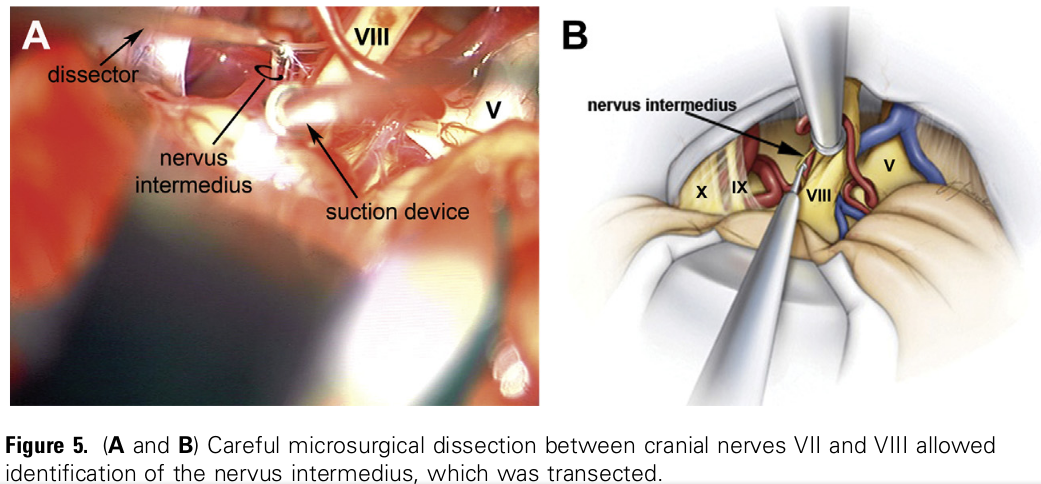
In the presence of a neurovascular conflict, microvascular decompression or sectioning of the nervus intermedius may be considered[^2].