Cerebral Venous Sinus Thrombosis
Last edit by Alaric Steinmetz on
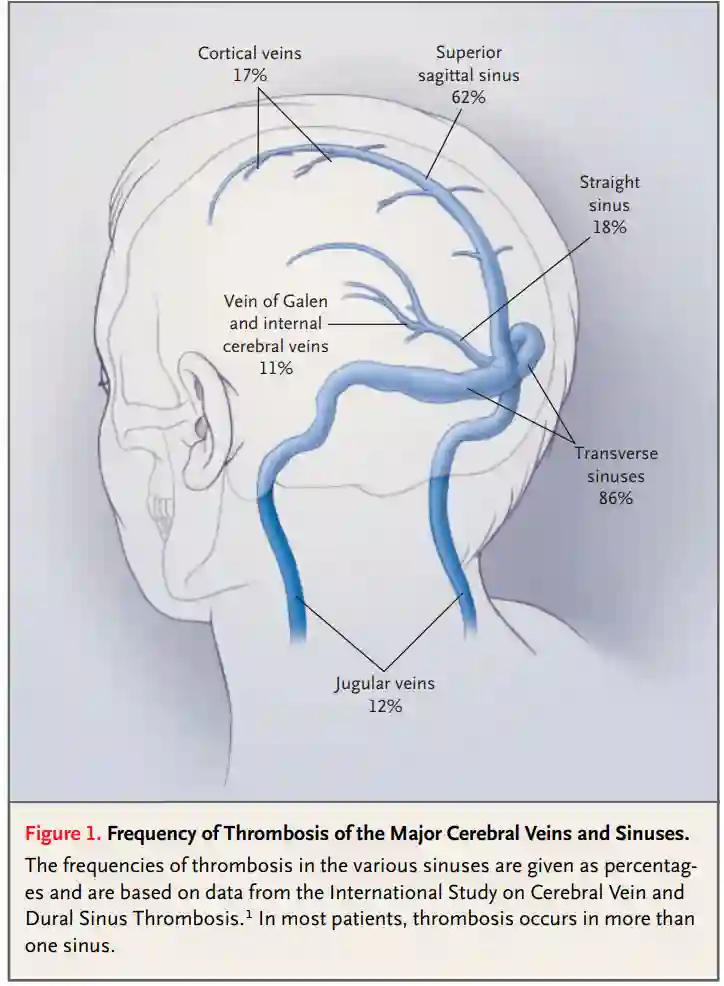
Sinus venous thrombosis refers to the occurrence of a thrombosis in a cerebral sinus.
Epidemiology
In adults, sinus venous thrombosis occurs with a frequency of about 3-4 per 1 million adults [^2], while in children the frequency is about 7 per 1 million [^2]. In adults, about 75% of affected patients are women [^2].
Symptoms
The most common and most nonspecific symptom of sinus venous thrombosis is headache, which occurs in about 90% of patients [^1] [^2]. The headache usually develops progressively over several days, but in about 10% of cases it can occur as a thunderclap headache [^3].
Localization

Therapy
Treatment is conservative using anticoagulation [^1]. In the acute phase, thrombolysis or endovascular treatment may also be considered in selected cases [^2].
Complications
The venous backflow caused by the thrombosis can lead to rupture of a vein, resulting in intracerebral hemorrhage. Such an intracerebral hemorrhage is referred to as congestive hemorrhage.
Imaging
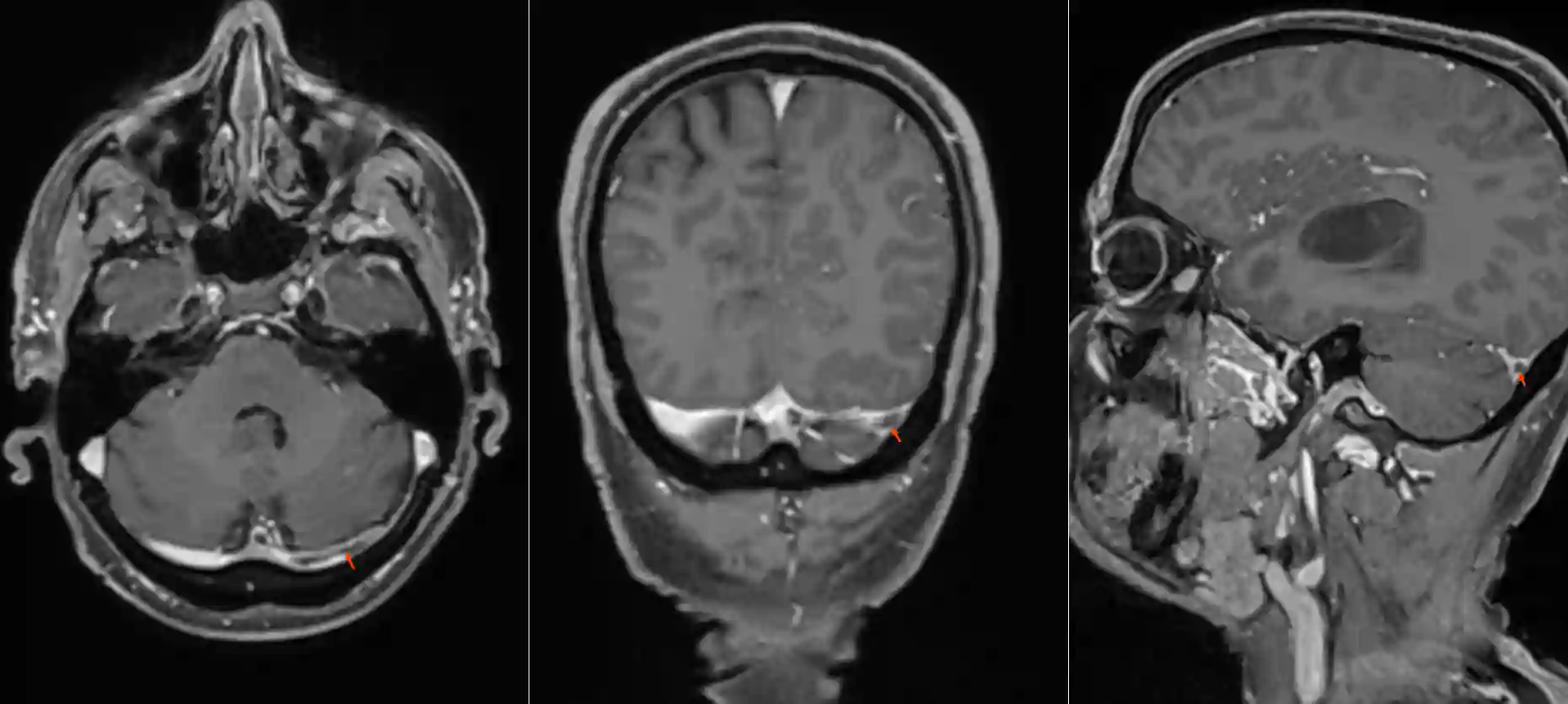
Depending on the extent of the thrombus, sinus venous thromboses can be visualized on CT or MRI imaging as well as on a digital subtraction angiography.