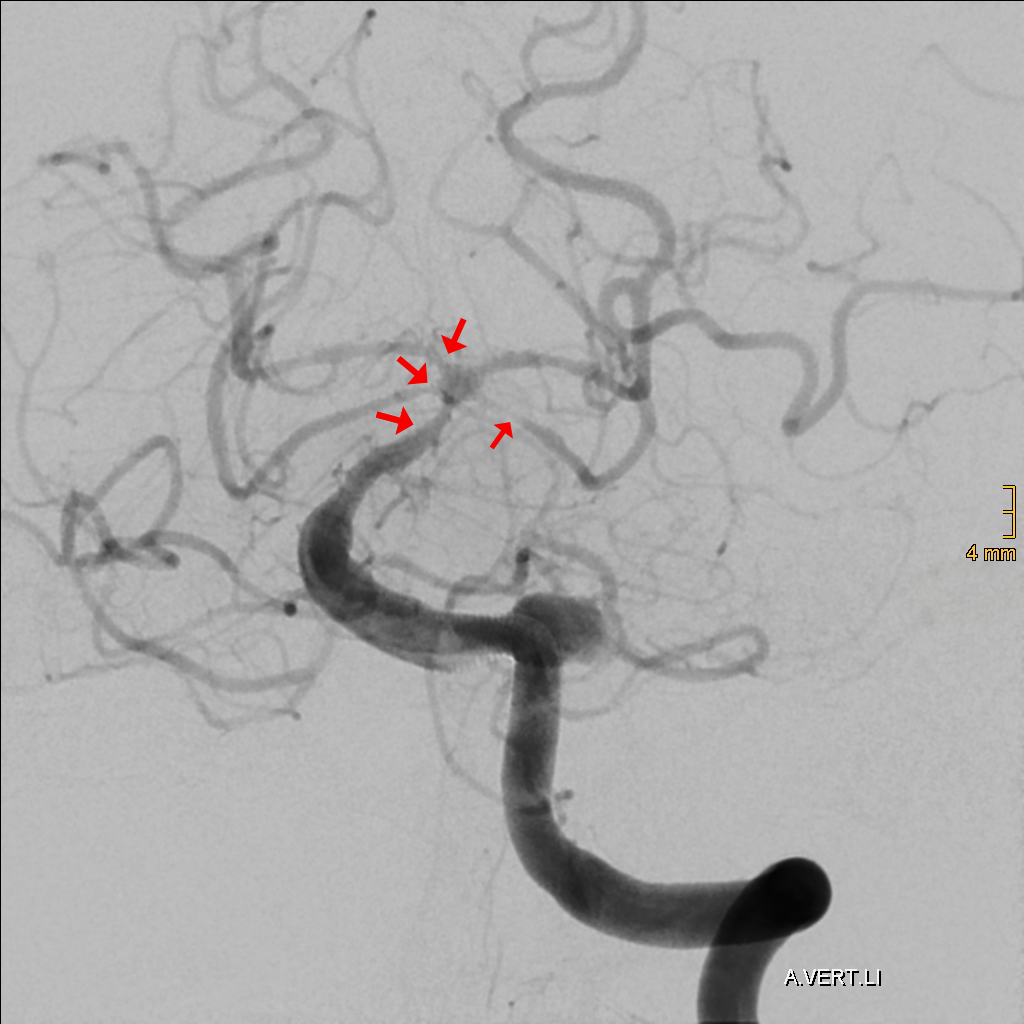
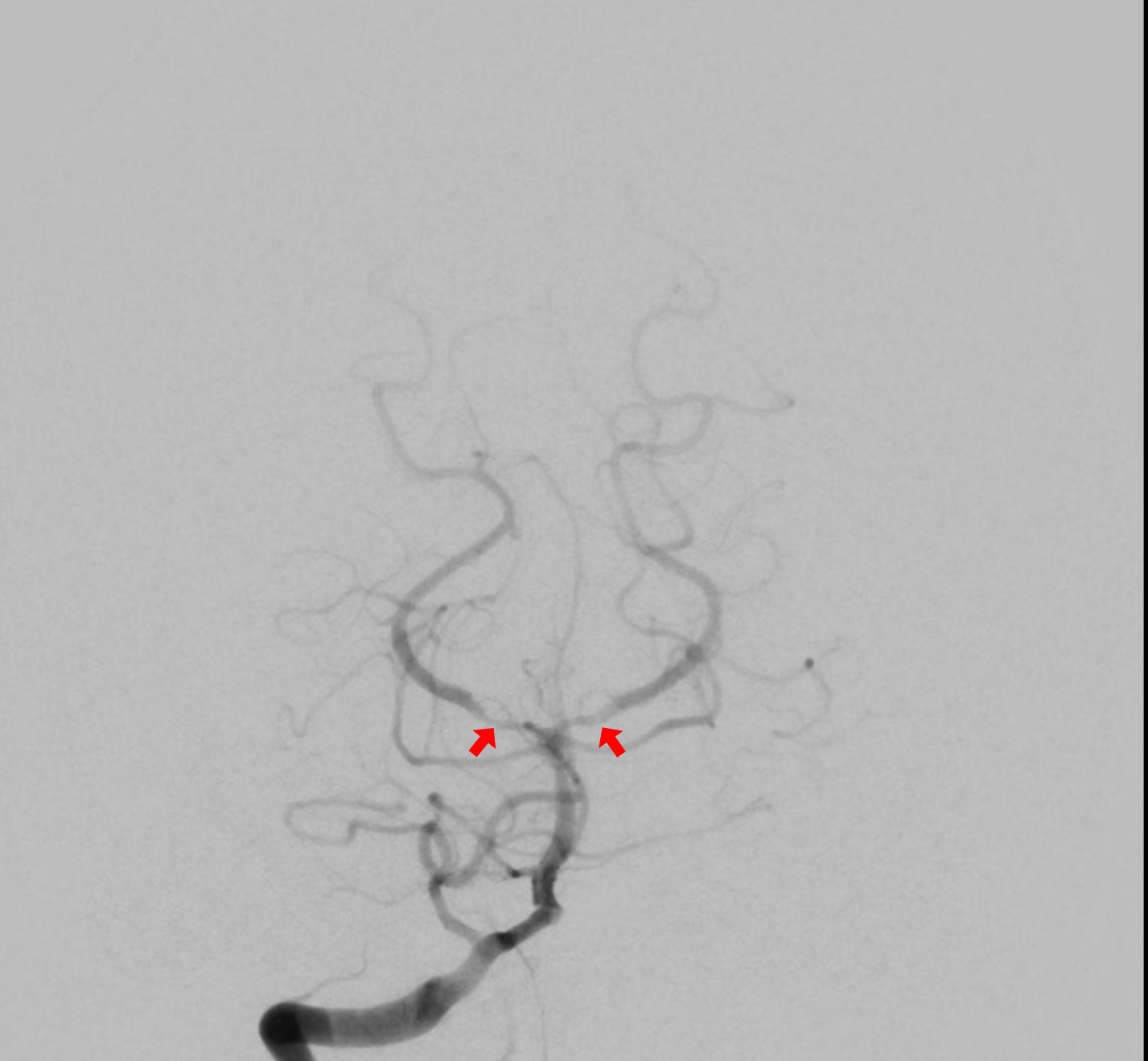
Cerebral vasospasm is a pathological vascular contraction that leads to hypoperfusion of the brain parenchyma. Vasospasms can have various causes, but in neurosurgery they are particularly often observed as a complication during the course of a Subarachnoid hemorrhage.
Epidemiology
Cerebral vasospasm is a common complication in patients with aneurysmal subarachnoid hemorrhage, with an incidence of 50-90 % in this patient population[^2].
Imaging
The gold standard for visualizing vasospasms is digital subtraction angiography.

Pathophysiology
Cerebral vasospasms arise from contraction of the vascular smooth muscle. The exact pathophysiological mechanism is unknown; however, it is assumed that hemoglobin released from the subarachnoid hemorrhage promotes calcium influx into the muscle cells and triggers muscle contraction[^1].