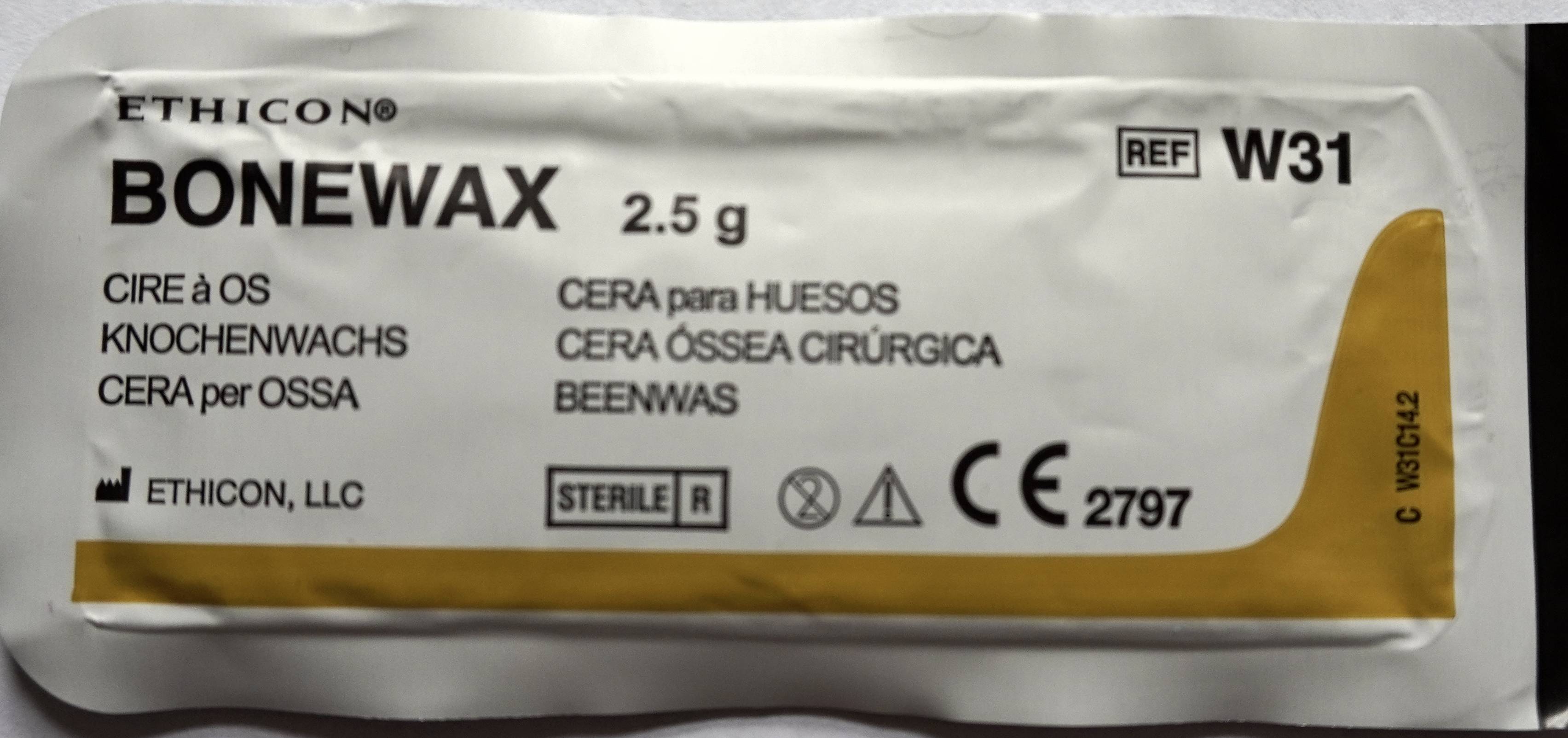
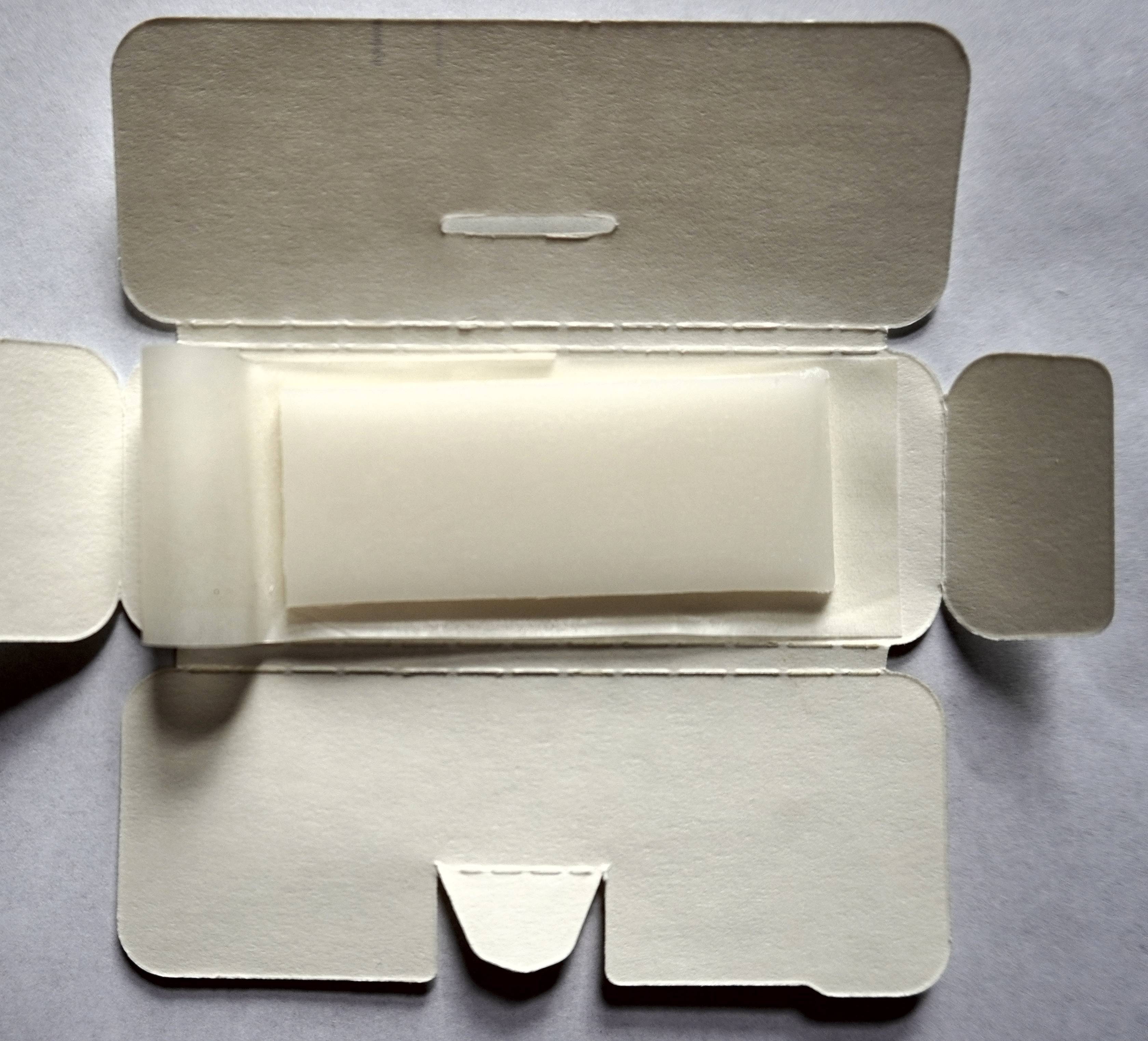
Bone wax is primarily used in neurosurgery for bony hemostasis. It is a sterile mixture of paraffin, beeswax, and plasticizers. The beeswax content is generally 85–90 %1. The mixture is sterilized with gamma radiation and should be stored at no more than 25 degrees Celsius. If bone wax is stored correctly, it has a shelf life of up to 5 years. Commercially available bone wax packages typically weigh 2.5 g per package2.
Mechanism of action
Hemostasis using bone wax is achieved through a purely mechanical mechanism without any biochemical effect. Bone wax is not resorbed.
Imaging
On postoperative MRI imaging, applied bone wax appears as air.
Complications caused by bone wax
Bone wax is routinely used in neurosurgical procedures but should nevertheless be used with caution. The use of bone wax increases the infection rate because the bone loses its ability to clear bacteria at this site34. Bone wax also leads to impaired bone healing; this should be taken into particular consideration in spinal procedures in which bony fusion is desired5. Various complications caused by mechanical compression resulting from the bone wax may also occur6.
Figure

References