Kang classification

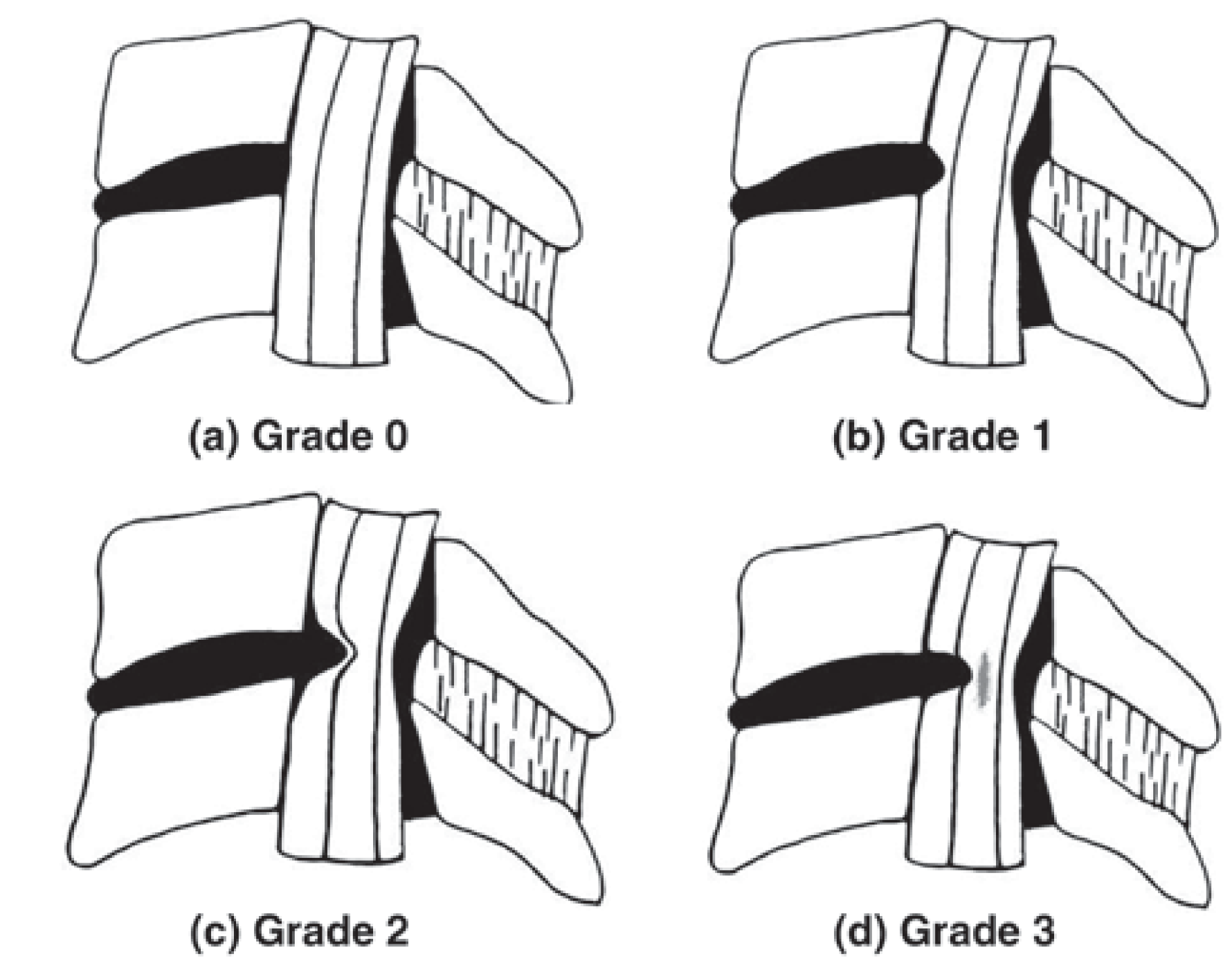
The Kang classification was published in 2011[^1] and is used to classify cervical Spinal canal stenosis into four different grades of severity based on MRI imaging.

Classification

Grade

Description

Characteristics

Grade 0

No stenosis

No narrowing of the spinal canal.

Grade 1

Mild stenosis

Narrowing of more than 50 % of the subarachnoid space without signs of spinal cord deformity.

Grade 2

Moderate stenosis

Spinal canal stenosis with spinal cord deformity but without T2 hyperintensity on MRI.

Grade 3

Severe stenosis

Hyperintense T2 signal in the spinal cord at the level of compression.

Figure

Illustration of the Kang classification
Illustration of the Kang classification from the original publication by Kang et al. (2011).

Editorial transparency

Authorship & revisions

Who created and updated this article, and which changes are documented.

Article created by
Last edited:
on
Revision history
3 edits · 1 contributor
Author list:
Show revision history 3 entries

3 edits by 1 author

Edit · Alaric Steinmetz ·

No content change recorded

Edit · Alaric Steinmetz · (+43 −65)
  • Text changed: “The Kang classification was published in 2011[^1] and serves to classify cervical spinal canal stenoses into four different grades of severity based on the MRI imaging .”“The Kang classification was published in 2011[^1] and is used to classify cervical Spinal canal stenosis into four different grades of severity based on MRI imaging .”

Article created on · Alaric Steinmetz

Image viewer

Image

Open original