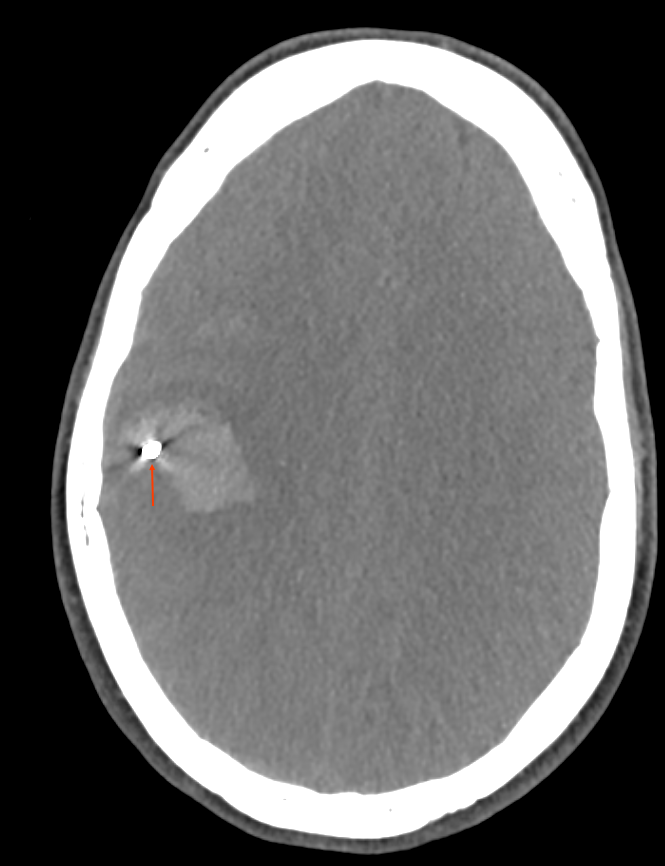
Onyx is a mixture of ethylene vinyl alcohol (EVOH) and tantalum dissolved in dimethyl sulfoxide (DMSO). Onyx is used in endovascular neuroradiology for the embolization of blood vessels. Onyx is a non-adhesive liquid embolic agent with a paste-like consistency. After administration, the DMSO is absorbed transmurally, leaving behind the mixture of tantalum and EVOH. The tantalum added to the mixture makes Onyx visible fluoroscopically on imaging. The higher the EVOH content, the higher the viscosity of Onyx. A distinction is made between Onyx-18 and Onyx-34[^1].
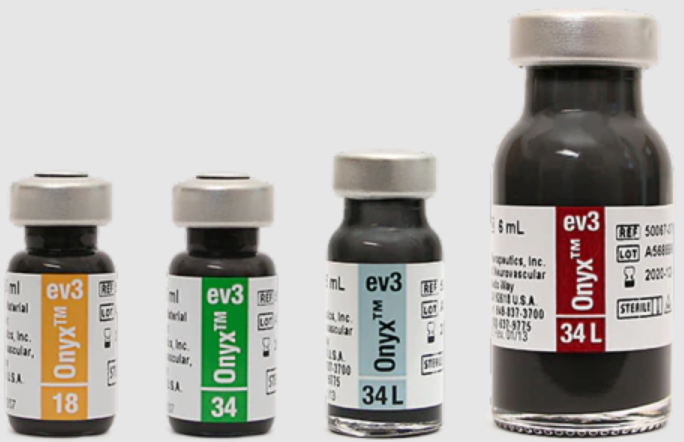
Onyx-18
Onyx-18 has an EVOH content of 6% and a viscosity of 18 cST according to the manufacturer's information from Medtronic.
Onyx-34
Onyx-34 has an EVOH content of 8% and a viscosity of 34 cST according to the manufacturer's information from Medtronic.
Imaging artifacts
On CT imaging, patients who have undergone embolization using Onyx develop imaging artifacts.